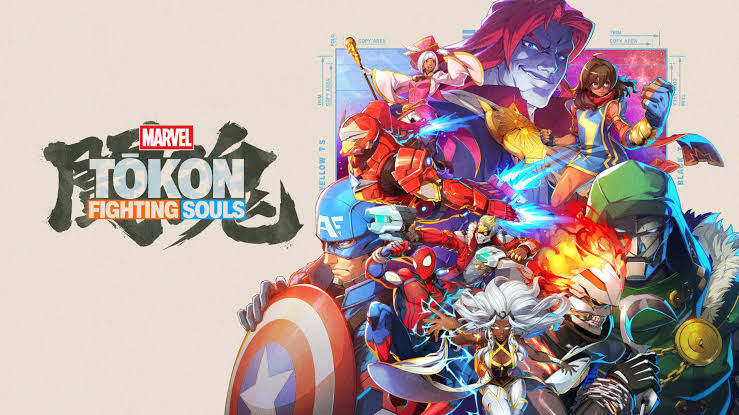
There are few developers I would trust more than Arc System Works to make a fighting game. From Guilty Gear to Dragon Ball FighterZ, the studio has spent years refining the art of making fighting games that look spectacular while hiding an impressive amount of depth underneath the surface. As someone who has spent a pretty significant portion of my life playing fighting games, seeing Arc System Works attached to a Marvel fighter immediately had my attention.
Marvel itself is certainly no stranger to the genre. For many of us, Marvel vs. Capcom was our introduction to just how chaotic, ridiculous and entertaining a fighting game could be. Those games turned Marvel’s superheroes into larger-than-life fighting game characters long before the MCU became the cultural juggernaut it is today.
So Marvel Tōkon: Fighting Souls has a rather interesting proposition. Take one of the most recognisable entertainment universes in the world, hand it to one of the best fighting game developers around, and let them reinterpret it through their distinctly Japanese, anime-inspired visual style.
Having now spent considerable time with the game, I think Arc System Works has created something that deserves to stand on its own rather than simply being remembered as another Marvel vs. Capcom successor.
AT A GLANCE
Platform: PlayStation 5, PC
Developer: Arc System Works
Publisher: Marvel Games / Sony Interactive Entertainment
Genre: Fighting
Reviewed on: PlayStation 5
A Different Kind of Marvel Story
The story is probably not the reason most people will buy Marvel Tōkon, but I was pleasantly surprised by how much I enjoyed the way Arc System Works approached it.
Instead of trying to create a massive cinematic campaign, Tōkon presents its story through a combination of illustrated panels, motion comics, voice acting and traditional fighting game encounters. Arc System Works has described the approach as a deliberate blend of American comics and Japanese manga, and that influence is immediately apparent.
The game brings together five different teams: the Unbreakable X-Men, Amazing Guardians, Fighting Avengers, Knights of Doom and Samurai Outriders. Each gets its own episode, allowing the game to introduce the characters and their motivations before gradually bringing the larger conflict together.
I actually think this is a much better fit for a fighting game than a traditional cinematic campaign would have been. Tōkondoes not spend hours trying to justify why superheroes are constantly beating the hell out of each other. It embraces the fact that this is a comic book story first and a fighting game second.
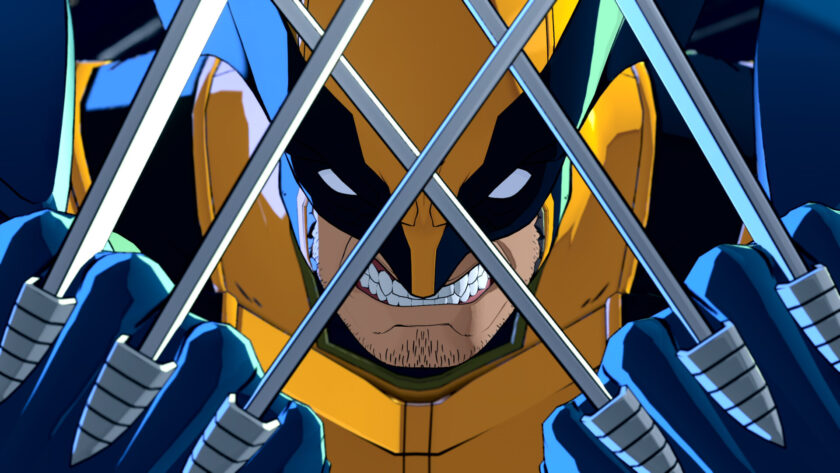
The result feels like an interactive Marvel comic rather than a watered-down version of a Marvel movie.
It is also helped considerably by the fact that the writing understands that these characters need to feel like themselves. The story is not particularly profound, but it gives the roster enough personality to make the interactions enjoyable. Even the fights themselves are peppered with character-specific exchanges, which makes the roster feel considerably more alive.
The story is relatively lightweight, though, and that is worth keeping in mind. Once you finish the episodes, the game makes it very clear that its real purpose is to get you into the fighting. The Guardian similarly noted that the story is fairly light and that the game’s real depth lies in its competitive mechanics.
Personally, I was completely fine with that.
The Fighting Is the Star
This is where Marvel Tōkon really starts to shine.
At first glance, the 4v4 format sounds like Arc System Works has simply decided to add another character to the familiar Marvel vs. Capcom formula. It really hasn’t.
Every match begins with a lead character and an assist character. The rest of your team becomes available as the match progresses, creating a fascinating rhythm where you gradually gain access to more of your team’s options instead of having all four characters available immediately. The system revolves around the Assemble Gauge and various conditions that allow additional members of your team to enter the fight.
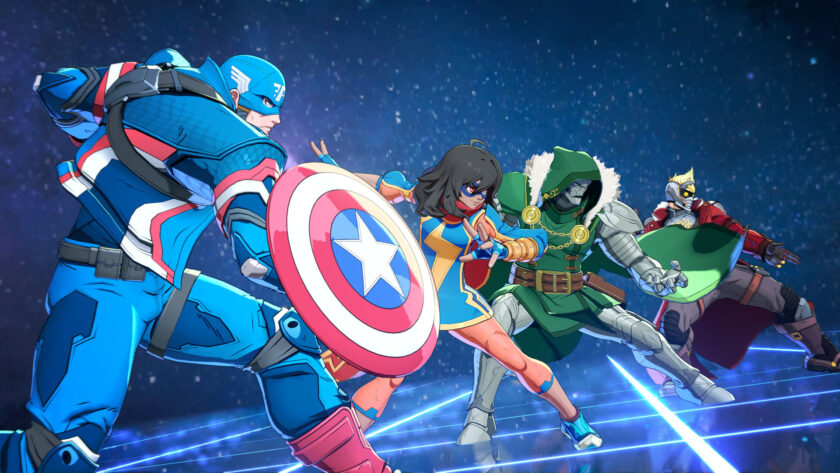
Even more interesting is the shared health bar.
Your entire team effectively functions as a single unit rather than four separate characters with individual health pools. That fundamentally changes how you think about switching characters. You are not simply tagging someone out because they are low on health. You are choosing which member of your team is best suited to the situation.
This makes team composition incredibly important.
A character might be fantastic as your point fighter but considerably more useful as an assist. Another might have an attack that completely changes the way you approach neutral. Someone else might become the perfect character to bring in once you have created an opening.
And this is where Tōkon starts to reveal its depth.
The game is remarkably approachable on the surface. Simplified inputs and easy-to-perform combos mean that you can pick up a controller and immediately start doing things that look spectacular. That accessibility is one of the game’s biggest strengths. Even people who normally struggle with fighting games can get something out of it very quickly.
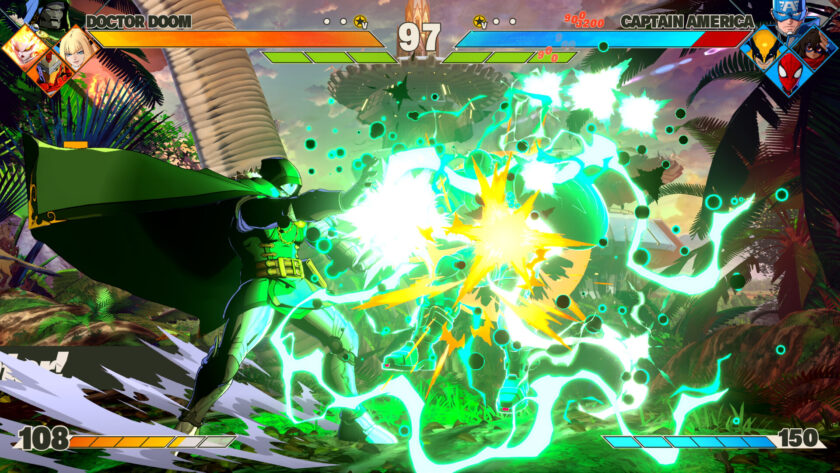
But the simplified controls do not mean the game is simple.
Once you start paying attention to assists, meter management, team composition, movement, spacing and when to bring your other characters into the fight, there is a considerable amount to learn.
This is very much a low-floor, high-ceiling fighting game.
And I particularly appreciate that Tōkon does not punish you for being a beginner.
The game also has an excellent approach to teaching players how to improve. Its Level-Up Missions give you specific goals rather than simply throwing long lists of button inputs at you. You are encouraged to understand what your character can actually do, gradually introducing concepts such as assists, meter management and more advanced combo structure. Recent coverage has rightly praised this as one of the game’s more elegant approaches to teaching fighting game fundamentals.
For me, this is one of the most important things Tōkon gets right.
It makes me want to get better rather than making me feel stupid for not already being good.
Modes and Content
Outside of the actual fighting, Tōkon is a relatively focused package.
Episode Mode provides the main story experience, while Versus Mode gives you the traditional local and CPU battles you would expect. There are also Casual and Ranked matches for online play, along with an Open Lobby that acts as a social hub between fights.
The Open Lobby is very familiar territory for anyone who has played Arc System Works’ previous games. You control an avatar, walk around the lobby and interact with other players before heading over to arcade cabinets to start a fight.
It is not revolutionary, but it adds personality to what would otherwise be a collection of menus.
There is also Arcadia Rumble, a more unusual party-style mode that moves away from the traditional fighting game structure. It is not going to replace the main competitive modes, but it is a nice diversion when you want something a little less serious.
The one criticism I do have is that the overall package is clearly built around the fighting itself. If you are looking for a huge single-player experience with dozens of hours of content, this is probably not going to satisfy you.
But that is also missing the point of Tōkon somewhat.
This is a game designed to be played, learned and replayed.
A Visual Feast
Visually, Tōkon is phenomenal.
Arc System Works has taken Marvel’s characters and completely embraced its own anime-inspired aesthetic. Rather than trying to make these characters look like their MCU counterparts, the game makes them look like they belong in an extremely expensive animated Marvel series.
And I love it.
The animation is probably the strongest part of the presentation. Spider-Man moves exactly how you would expect Spider-Man to move. Iron Man’s attacks have a completely different sense of weight and range. Characters like Storm and Doctor Doom have visual effects that make their powers feel appropriately ridiculous.
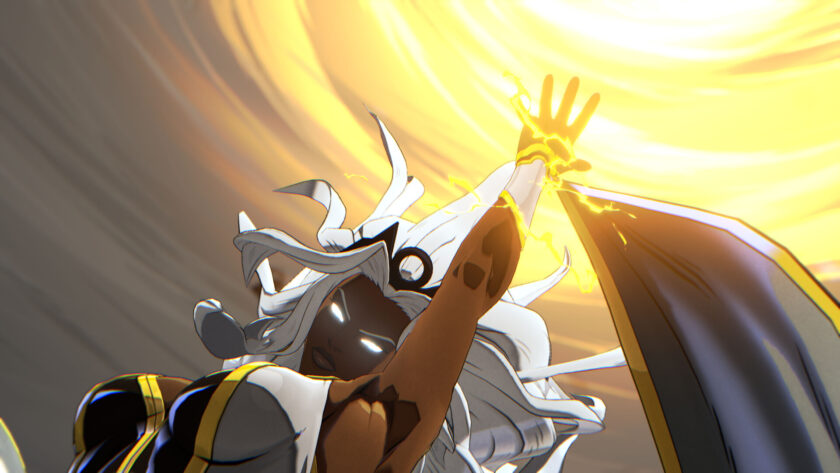
This is particularly impressive during the game’s Ultimate Skills.
There is a point where fighting games can become so visually extravagant that it becomes difficult to tell what is actually happening. Tōkon gets dangerously close to that line, but generally manages to keep its characters readable despite everything happening on screen.
The stages are equally impressive. They are packed with little Marvel references and visual details, while stage transitions are not merely cosmetic. Arc System Works has incorporated them into the combat itself, giving environmental transitions an actual gameplay purpose.
The overall effect is spectacular.
This is probably one of those games where screenshots do not quite communicate how good it looks in motion.
Sound and Music
The audio design complements the visuals perfectly.
The soundtrack has that unmistakable Arc System Works personality. It is energetic, dramatic and often completely over the top, which is exactly what I want from a Marvel fighting game.
The sound effects are equally satisfying. Punches feel impactful, supers sound appropriately ridiculous and every character has enough unique audio feedback to make their attacks feel distinct.
The voice acting is also strong, particularly during character interactions and pre-fight exchanges. There is a theatrical quality to the performances that fits the overall tone of the game.
Nothing about the audio presentation feels restrained.
And thankfully, Tōkon does not need to be restrained.
Technical Performance and Netcode
This is the one section where I have to make an important distinction between the PS5 and PC versions.
On PS5, Tōkon is an extremely polished experience. The combat is designed around a consistent 60fps experience, and when everything is running properly, the responsiveness is exactly what you want from a modern fighting game.
The PC launch, however, was considerably rougher.
The game’s beta had already produced widespread complaints about stuttering, low frame rates and poor optimisation, with Arc System Works acknowledging the problems before launch.
Unfortunately, those problems carried over into the initial PC release.
Players reported frame-rate problems, crashes and inconsistent performance, while online matches could also suffer from rollback spikes. The Steam version subsequently received a Mixed reception, with the technical problems becoming one of the biggest talking points surrounding the game.
The good news is that Arc System Works did not simply ignore the situation.
A major post-launch patch addressed CPU inefficiencies and even removed unnecessary audio input checks that had surprisingly been contributing to performance problems. Reports following the patch indicate that performance has improved substantially, although some players are still experiencing inconsistencies.
That makes the PC situation much easier to recommend today than it was at launch.
It is still not perfect, but there is a meaningful difference between saying “the PC version is broken” and saying “the PC version has some optimisation issues that the developers are actively fixing.”
The netcode is similarly promising.
Tōkon uses rollback netcode and supports cross-play between PS5 and PC. When everything is working properly, online matches feel responsive and stable, which is exactly what you want from a game where a single missed input can completely change the outcome of a match.
There have been reports of rollback spikes, particularly alongside the PC performance problems, so I would not call the online infrastructure flawless.
But the foundation is absolutely there.
And that is important because a fighting game like this lives or dies by its online community.
Final Verdict
Marvel Tōkon: Fighting Souls is not Marvel vs. Capcom 2, and I think that is ultimately a good thing.
Trying to recreate one of the most beloved fighting games ever made would have been an easy trap for Arc System Works to fall into. Instead, the studio has taken the basic idea of Marvel superheroes fighting alongside each other and rebuilt it around its own philosophy.
The result is a fighting game that is incredibly easy to pick up, surprisingly difficult to master and visually spectacular almost every second you are playing it.
The 4v4 system is not just a gimmick. The shared health bar, Assemble Gauge and emphasis on team synergy fundamentally change how the traditional tag fighter works. The simplified controls make the game welcoming to newcomers, while the deeper mechanics give experienced players plenty of reasons to keep playing.
The story is charming, if lightweight. The selection of modes is functional rather than massive. The visuals are outstanding. The music is fantastic. The PS5 version is technically excellent, while the PC version has needed some post-launch attention to get where it should have been at release.
But none of those things change what I think is the most important takeaway from Marvel Tōkon.
It is fun.
Not just “Marvel fan” fun. Not just “Arc System Works fan” fun. It is the kind of fighting game where you finish a match, realise you made three completely stupid mistakes, and immediately want to hit rematch because you know exactly what you could have done differently.
At 29, I have played enough fighting games to know that getting me genuinely interested in learning a new one is not particularly easy anymore. Tōkon managed to do it.
And perhaps that is the best compliment I can give it.
Arc System Works has taken Marvel’s characters, mixed them with its own fighting game DNA, and created something that feels familiar without being derivative.
9/10