There’s a particular kind of confidence that comes with a new game from Housemarque. Ever since Returnal transformed the studio’s arcade roots into something darker, stranger, and unexpectedly emotional, expectations surrounding Housemarque have changed. Saros arrives carrying the weight of that success, but what immediately stands out is that it is not trying to simply recreate Returnal with a different coat of paint.
Instead, Saros feels like a studio refining its identity. The DNA of Returnal is still present in the fast, fluid combat and overwhelming bullet patterns, but the overall experience feels more approachable and far more deliberate in its design. Rather than punishing failure as harshly as its predecessor, Saros focuses more on progression and persistence, giving the game a steadier rhythm and a stronger sense of momentum right from the start.
AT A GLANCE
Developer: Housemarque
Publisher: Sony Interactive Entertainment
Release Date: April 30, 2026
Platforms: PlayStation 5, PlayStation 5 Pro
Story
Saros is much more emotionally grounded when compared to Returnal. The mystery and cosmic horror elements are still very much present, but this time they feel more focused, anchored by a protagonist who feels easier to understand and connect with from the very beginning.
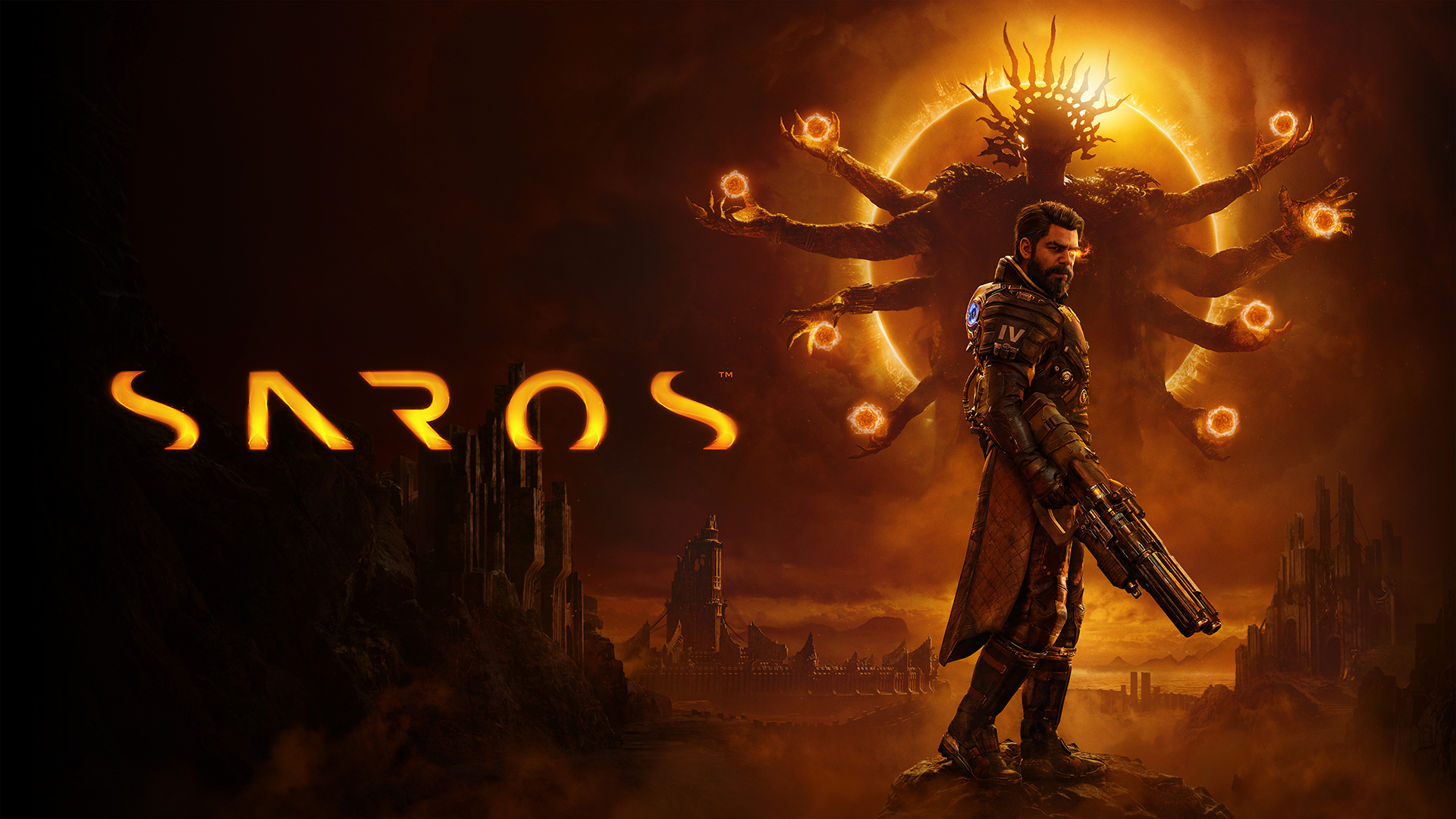
You play as Arjun Devraj, a Soltari Enforcer stranded on the eclipse-ridden planet of Carcosa after a catastrophic event leaves the colony in ruins. Much of the story revolves around uncovering what happened to the people stationed there, but beneath all of the sci-fi mystery is a more personal journey about grief, guilt, and obsession. I found myself genuinely invested in Arjun’s search for answers, not just because of the larger mysteries surrounding Carcosa, but because the game does a strong job of making his motivations feel believable.
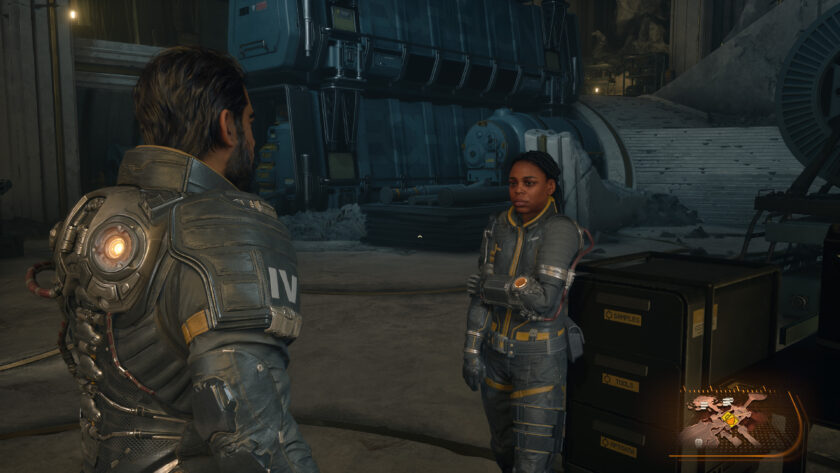
What I appreciated most is that Saros does not bury its emotional core beneath endless ambiguity. There are still unanswered questions and deliberately cryptic moments, but unlike Returnal, which often felt intentionally elusive, Saros feels more willing to let the player connect the dots emotionally before everything else. The result is a narrative that feels more immediate and easier to latch onto without losing that unsettling sense of mystery.
The worldbuilding is equally impressive. Carcosa itself feels almost alive, twisted by the permanent eclipse hanging overhead. Every environment tells part of the story, from abandoned research sectors to crumbling religious sanctuaries filled with remnants of a society slowly collapsing under paranoia and fear. I constantly felt like I was uncovering pieces of something ancient and deeply wrong.
That said, the story still occasionally leans a little too heavily into abstract sci-fi concepts, particularly during its later sections. Some revelations are intentionally vague, and there were moments where I wished the game trusted its strongest emotional beats enough to let them breathe without layering another mystery on top. Even so, I found the overall journey far more satisfying than frustrating.
By the end, Saros left me haunted by its exploration of grief and the fear of being unable to let go. That emotional clarity gives the entire experience a surprising amount of weight, and it stayed with me long after the credits rolled.
Gameplay
If there’s one thing that Housemarque understands – it’s how to make movement and combat feel incredibly satisfying. Everything has a sense of speed and precision to it. Dashing through waves of projectiles, weaving between enemy attacks, and chaining abilities together creates a flow state that is consistently rewarding once you settle into its rhythm.
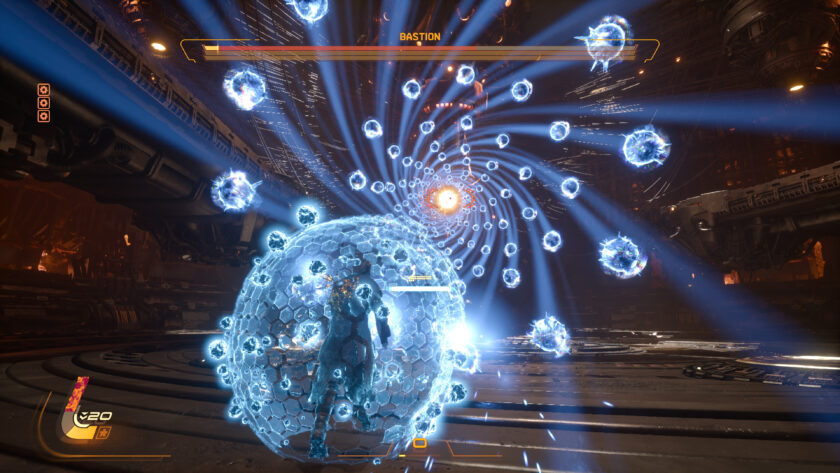
There are traces of Returnal in the way Saros handles combat, particularly in its bullet-heavy encounters and emphasis on mobility, but the overall structure feels noticeably different. Saros is less punishing and more progression-focused, which gives the gameplay a steadier sense of momentum. I never felt like the game was constantly trying to push me backward for making mistakes. Instead, it encourages experimentation, rewarding you for adapting your build and playstyle over time.
Weapon variety is one of the game’s strongest aspects. Nearly every weapon I picked up felt distinct, not just in how it fired but in how it changed the pacing of combat entirely. Some encounters favored aggressive close-range play, while others pushed me toward a more cautious and tactical approach. The upgrade system complements this well, allowing builds to evolve naturally without becoming overwhelming.
I was also surprised by how much I enjoyed the exploration. Carcosa is filled with hidden paths, environmental storytelling, and optional encounters that constantly tempted me away from the critical path. The world feels layered and interconnected in a way that makes exploration rewarding even when the actual rewards are minimal. There is always a sense that something strange or dangerous could be waiting around the next corner.
Boss encounters are easily among the highlights. Housemarque has a real talent for designing fights that feel chaotic without becoming unreadable, and Saros continues that trend. These battles demand focus and adaptability, but they rarely feel unfair. Some of the later fights are visually overwhelming in the best possible way, filling the screen with color, particle effects, and relentless attack patterns while somehow remaining manageable once you learn their rhythm.
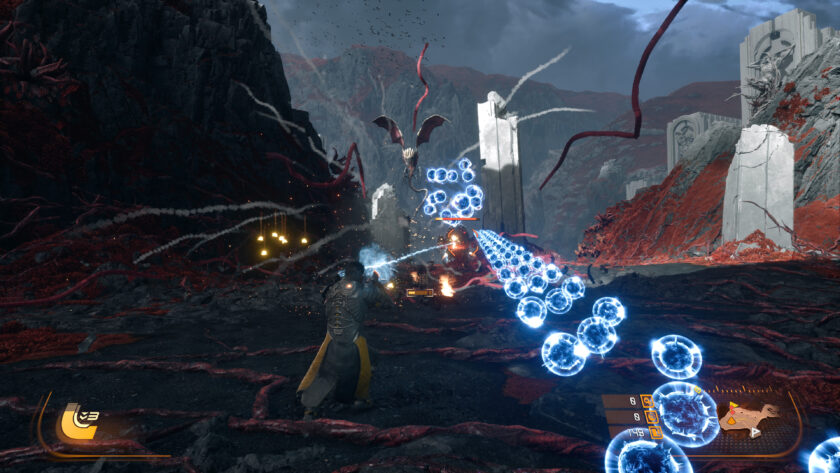
If there is one area where the gameplay occasionally stumbles, it is in its pacing. A few sections in the middle of the game drag slightly, particularly when objectives become more repetitive than the combat itself. Even then, the core mechanics are strong enough that I rarely found myself losing interest for long.
What impressed me most overall is how confident Saros feels mechanically. It takes familiar ideas and refines them into something smoother, more approachable, and consistently engaging without sacrificing challenge or intensity.
Visuals, Audio and Technical Performance
Saros is one of those games that immediately reminds you why Housemarque has become one of the most visually distinctive studios working today. From the moment I stepped onto Carcosa, I was struck by just how dense and atmospheric everything felt. The world is drenched in this haunting golden glow cast by the permanent eclipse overhead, giving environments an almost dreamlike quality that constantly shifts between beautiful and unsettling.
What impressed me most was the sheer amount of visual detail packed into every encounter. Combat arenas erupt into chaos with layers of particle effects, enemy projectiles, environmental destruction, and lighting effects all happening simultaneously, yet the game somehow manages to remain readable even during its most overwhelming moments. Housemarque clearly understands how to balance spectacle with clarity, and that makes every fight feel exhilarating instead of visually exhausting.
The art direction deserves just as much credit as the technical side. Carcosa feels ancient, alien, and deeply wrong in a way that constantly pulled me deeper into its world. Abandoned structures, distorted landscapes, and massive cosmic vistas all carry this oppressive atmosphere that lingers long after you leave an area behind. I often found myself slowing down just to take in the environments before pushing forward.
Audio design is equally impressive. The soundtrack leans heavily into ambient tension and pulsating synth-driven tracks that build naturally alongside the action. During quieter moments, the game uses silence incredibly well, letting distant machinery, environmental echoes, and unsettling sound cues create a constant sense of unease. Then, when combat erupts, the music swells into something intense and almost hypnotic without ever overpowering the action.
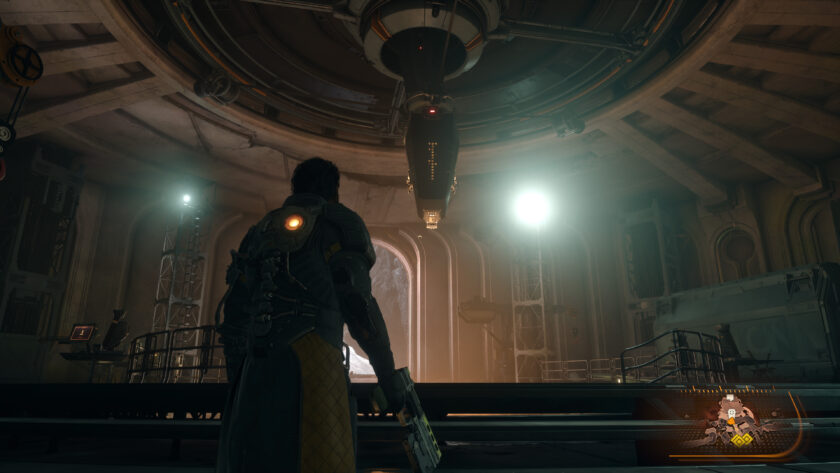
The DualSense implementation on the base PS5 is also excellent. Adaptive triggers give weapons a distinct feel, while the haptics add subtle texture to movement, environmental effects, and combat feedback. It never feels gimmicky, and there were several moments where the controller feedback genuinely added to the immersion.
Performance on the base PS5 is largely very solid. For most of my time with the game, it maintained a smooth 60fps even during heavy combat encounters, and the near-instant load times keep the pacing intact. However, I did notice occasional frame drops and brief stutters during particularly chaotic late-game fights where the screen became flooded with effects and enemies at once. Image quality can also appear slightly soft in motion during especially effects-heavy scenes.
Even so, none of these issues significantly impacted my experience. On a base PS5, Saros still feels polished, visually stunning, and technically impressive for a game pushing this much action and visual density at once.
Final Thoughts
Saros feels like a natural evolution for Housemarque. While there are still traces of the studio’s arcade-inspired DNA throughout the experience, this is a game that feels more confident, more emotionally grounded, and far more deliberate in what it wants to achieve.
But perhaps most importanly, Saros never feels like it is simply trying to recreate past success. It builds upon familiar ideas while carving out an identity of its own, and that confidence makes all the difference.
9/10