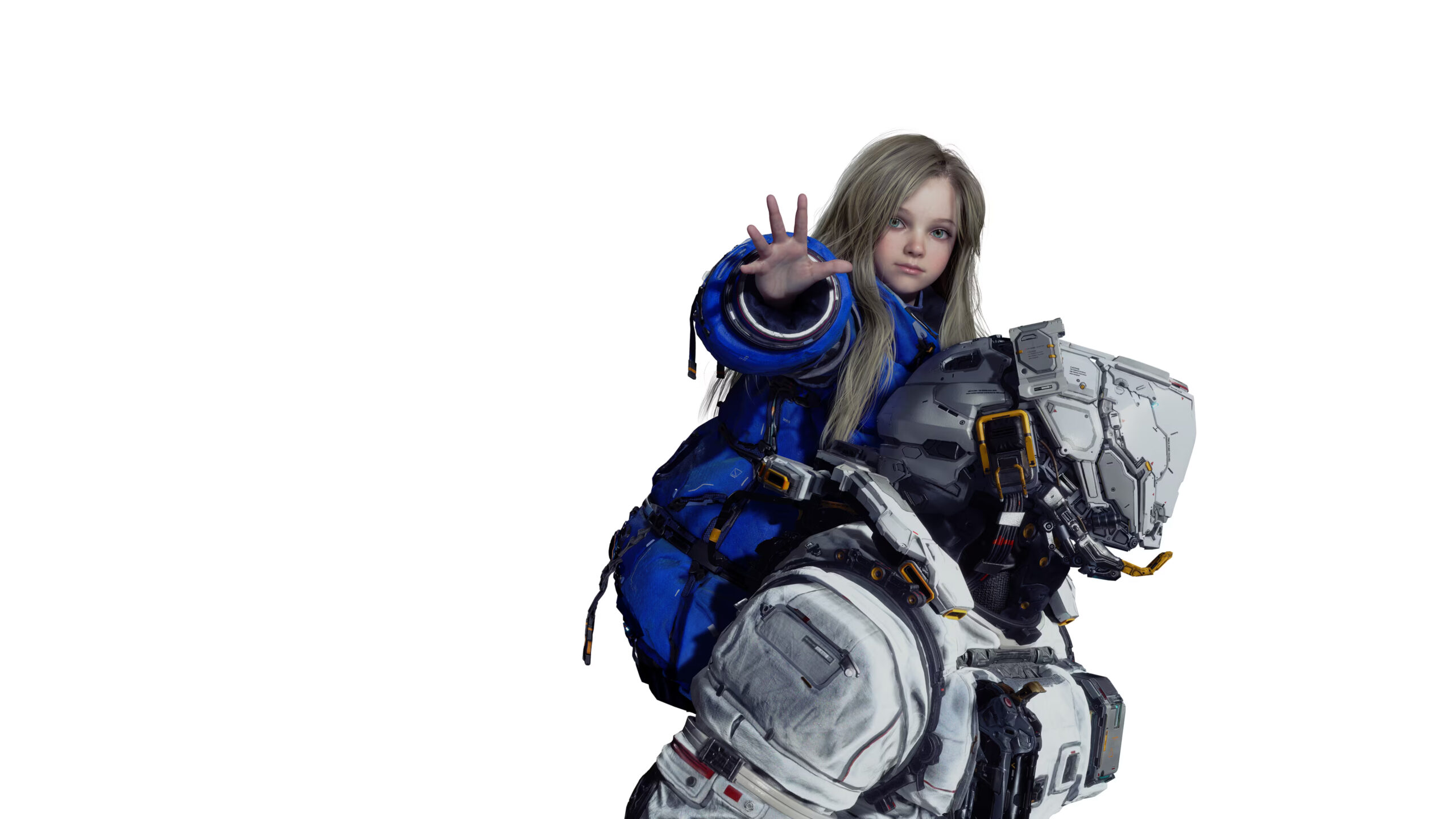
There’s something immediately disarming about Pragmata. For a project that first introduced itself through cryptic, almost surreal trailers, it doesn’t open with spectacle or urgency. Instead, it leans into stillness, allowing a quiet unease to gradually settle in.
Set against the stark isolation of a lunar research facility, Pragmata establishes its tone early. This is a world that feels abandoned yet watched, sterile yet fragile, as if something went wrong long before you arrived. You step into it not as a conquering hero, but as someone trying to make sense of the silence.
It quickly becomes clear that Pragmata is not chasing scale in the way most sci-fi games do. It feels deliberately smaller and more intimate, with a story that sits beneath its sci-fi premise rather than being defined by it. There is a clear focus on connection over survival, and the game trusts its atmosphere and subtle storytelling to carry that idea forward.
AT A GLANCE
Developer: Capcom
Publisher: Capcom
Release Date: April 17, 2026 (PS5, Xbox Series X/S, PC) | April 24, 2026 (Nintendo Switch 2)
Platforms: PlayStation 5, Xbox Series X/S, Windows (PC), Nintendo Switch 2
Story
What surprised me most about Pragmata is how quickly it shifts from mystery to something more personal. Going in, I expected a dense, high-concept sci-fi narrative, the kind that keeps you at arm’s length with jargon and ambiguity. Instead, I found myself pulled into something far more intimate.
You follow Hugh, a lone astronaut trying to survive inside a malfunctioning lunar facility, but the story really begins when he meets Diana, an android girl with abilities that go far beyond simple assistance. I was pleasantly surprised by how naturally their relationship develops. It never feels forced or overly sentimental. There are no heavy-handed cutscenes trying to convince you to care. Instead, it builds through small moments, quiet interactions, and the way they begin to rely on each other.
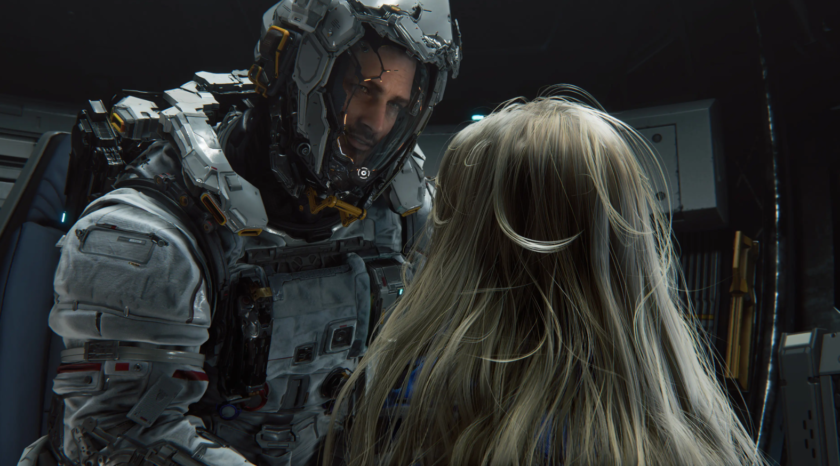
As the story unfolded, I found myself genuinely attached to Diana. There is a vulnerability to her character that contrasts sharply with the cold, mechanical world around her. At the same time, Hugh’s guarded demeanor slowly gives way, and that progression feels earned. It is not about grand emotional speeches but about subtle shifts in behavior that make their bond believable.
That said, the narrative does not always land cleanly. Pragmata leans heavily into ambiguity, sometimes to its own detriment. There were moments where I wished it would be more direct, especially when it comes to the larger sci-fi concepts driving the plot. Some threads feel underexplored, and a few revelations lack the clarity needed to fully resonate.
Even so, the emotional core holds it together. I may not have fully grasped every detail of its world, but I understood the connection at its center, and that is what stayed with me.
Gameplay
Gameplay is where Pragmata tries to set itself apart, and for the most part, it succeeds, even if it does not always stick the landing.
At its core, combat is built around dual control. I was controlling Hugh in real time, moving, aiming, and staying alive, while simultaneously relying on Diana to hack enemy defenses through a grid-based interface layered over the action. On paper, it sounds like it should fall apart. And early on, I will admit, it kind of does. I found myself struggling to juggle both roles, especially in more chaotic encounters where the game demands quick decisions on both fronts.
But once it clicked, it really clicked. There is a satisfying rhythm to it. I would expose an enemy’s weak point through Diana’s hacking, then immediately capitalize on it with Hugh. That back-and-forth creates a sense of coordination that feels genuinely unique. It is not just shooting or just puzzle-solving, it is both happening at once, and when it works, it feels great.
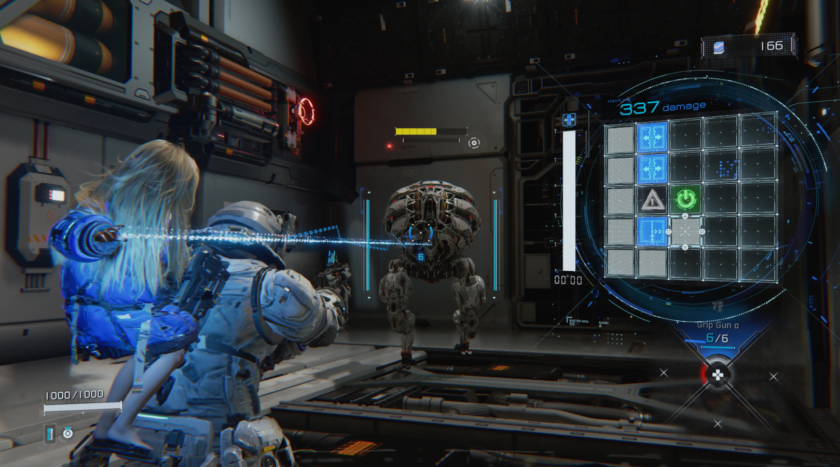
The problem is that the game does not evolve this idea as much as I hoped. A few hours in, I started to notice repetition creeping in. The hacking sequences, while initially engaging, do not gain enough complexity or variation to stay consistently fresh. Enemy types change, but the core interaction remains largely the same, and that sense of discovery starts to fade.
Exploration and traversal are more straightforward. Moving through the lunar facility has its moments, especially when the game leans into low-gravity movement, but these sections feel more like connective tissue than standout features. They do their job, but they rarely surprise.
I still appreciate what Pragmata is trying to do here. It is not playing it safe, and I would take an ambitious system that occasionally stumbles over something generic any day. Even when it falters, there is enough originality in its design to keep it engaging.
Visuals, Audio and Performance
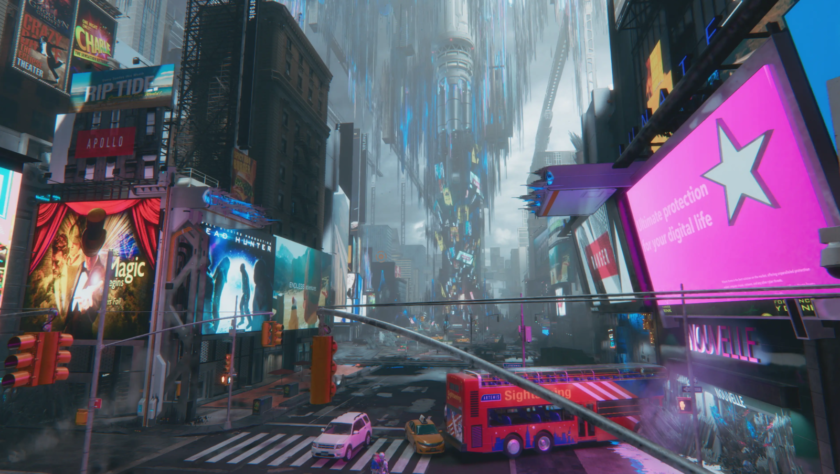
Pragmata makes a strong first impression, but what stuck with me wasn’t just how it looks, it’s how deliberately restrained everything feels. The lunar facility is cold and sterile, filled with clean metallic surfaces and soft, artificial lighting that gives the whole place an almost clinical emptiness. I found myself appreciating the smaller visual details more than the big moments, like the way light reflects off glass corridors or how distant Earth hangs silently in the sky, always present but never intrusive.
Character work is equally understated. Hugh’s bulky suit design sells his isolation, while Diana’s more delicate, almost fragile appearance creates a sharp contrast. Their animations do a lot of heavy lifting for the story. I noticed small gestures and pauses that added personality without needing dialogue, which fits the game’s overall tone perfectly.
The audio design follows a similar philosophy. The soundtrack rarely tries to dominate a scene. Instead, it leans into ambient textures that quietly build tension. There were long stretches where I was just listening to the hum of machinery or the faint echo of my own footsteps, and it worked. When the music does come in, it feels intentional, usually tied to emotional beats rather than action.
That said, I did find the soundtrack a bit too subtle at times. There were moments where I wished for something more memorable, something that lingered after I put the controller down. As it stands, it serves the atmosphere well but does not leave a strong identity on its own.
Performance-wise, the experience was mostly smooth, and load times were reasonable, and I did not encounter any major bugs.
Conclusion
Pragmata is not an easy game to sum up, and that feels appropriate given what it is trying to do. It does not chase spectacle in the way many big-budget sci-fi games tend to. Instead, it leans into atmosphere, restraint, and a more intimate kind of storytelling.
I walked away from it genuinely moved. I was pleasantly surprised by how much I cared about its central relationship, and I found myself thinking about Hugh and Diana long after the credits rolled. Their journey gives the game a strong emotional core that carries it through even its quieter or more ambiguous moments.
It feels like a game that knows exactly what kind of experience it wants to be, even if it does not always execute on every front. I would much rather play something that takes risks and stumbles than something that plays it safe from start to finish.
Pragmata does not just leave an impression, it lingers. In a landscape crowded with louder, more predictable experiences, it feels distinct, memorable, and, at its best, genuinely special.
9/10