After four years of updates, new zones, new systems, and a steadily expanding class roster, Diablo Immortal faces a challenge that every long-running live service game eventually encounters. Adding more content is no longer enough. New additions need to feel genuinely different.
That is what makes the Warlock so refreshing.
After spending several days with early access to Diablo Immortal’s newest class, I expected to find another variation on familiar themes. Diablo has never been short on dark spellcasters, after all. Instead, I found a class that manages to carve out a surprisingly distinct identity within a roster that already includes Necromancers, Blood Knights, Wizards, and Tempests.
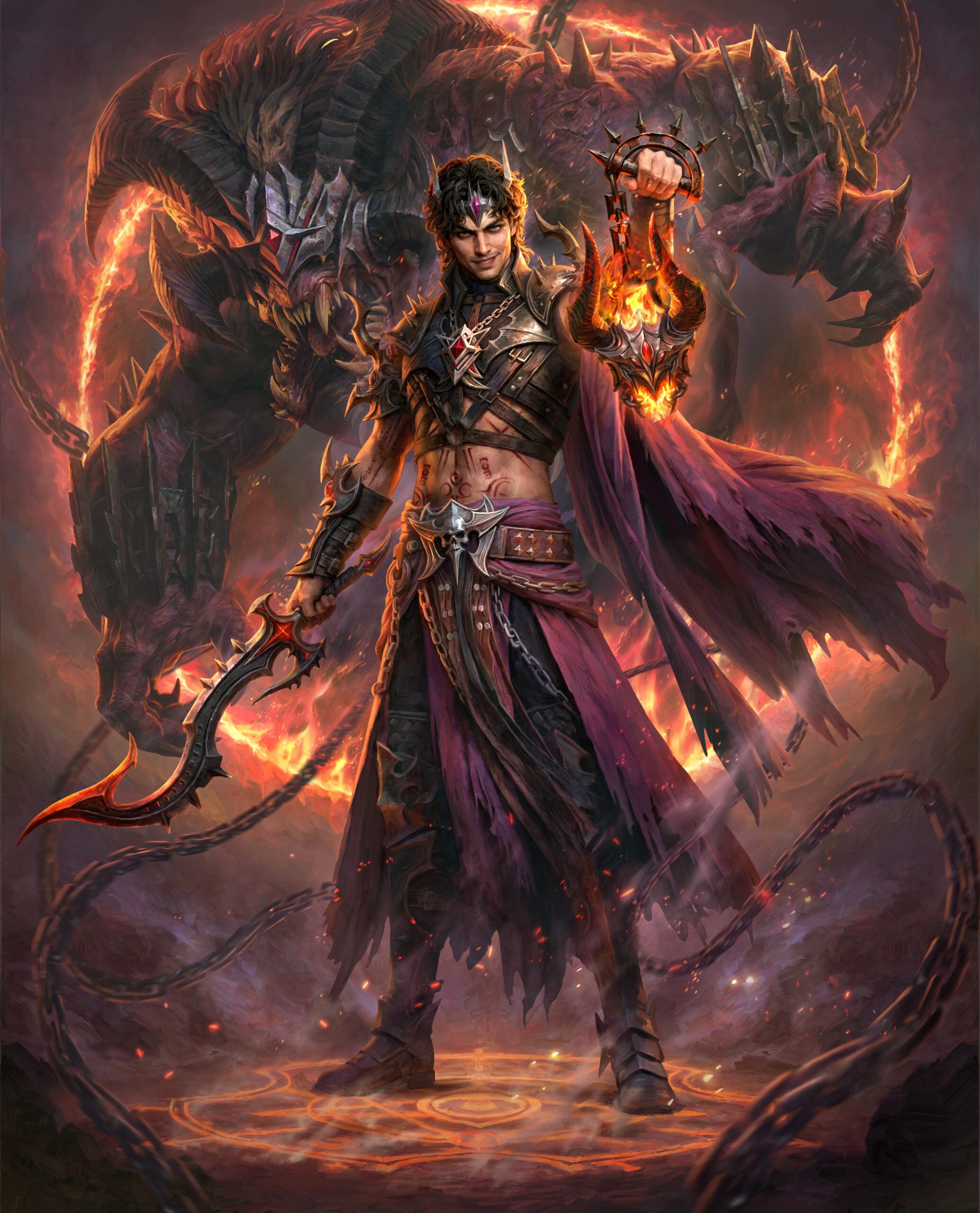
The Warlock is built around forbidden magic, demonic servants, and the ability to tear open portals across the battlefield. On paper, it sounds like a collection of ideas we’ve seen before. In practice, the way those mechanics come together creates one of the most engaging classes Diablo Immortal has introduced in years.
More importantly, it feels different.
A Summoner That Never Feels Passive
The easiest comparison is the Necromancer. Both classes command creatures from beyond the mortal realm, both lean heavily into dark fantasy themes, and both can fill the screen with allies and effects.
The similarities largely end there.
Where the Necromancer often feels like a commander directing an army, the Warlock feels like someone constantly negotiating with dangerous powers they can barely control. Demons are not simply summoned and forgotten. They become part of a larger combat puzzle.
Some abilities empower them. Others reposition them. In certain situations, sacrificing them becomes the optimal play.
This constant interaction keeps the class remarkably active and engaging for me in a way like never before.
Throughout my time with the Warlock, I rarely settled into a comfortable rotation. Every encounter encouraged a different decision. Sometimes the best option was overwhelming a group with summoned demons. Other times it was detonating those same summons for burst damage before shifting positions through a portal and setting up the next attack.
The result is a class that feels surprisingly dynamic, even during routine farming sessions.
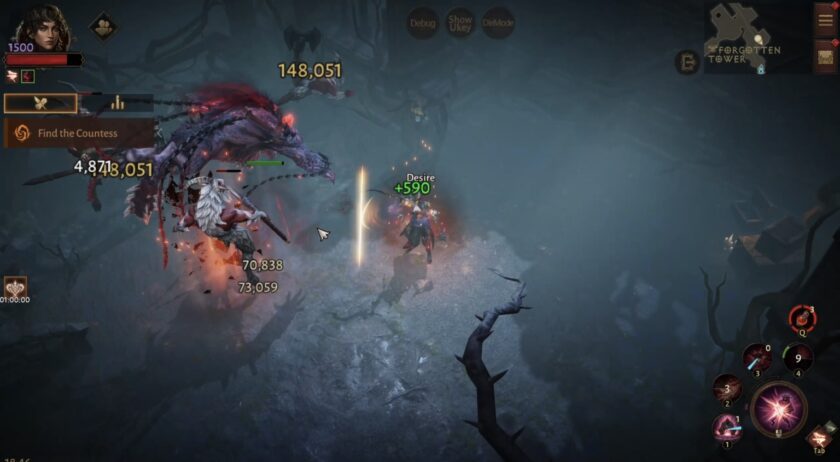
While demon summoning may be the headline feature, the portals are what truly define the Warlock.
Diablo Immortal already has several highly mobile classes. Demon Hunters can dart around the battlefield with ease. Blood Knights thrive on aggressive movement. Monks remain some of the most agile combatants in the game.
The Warlock approaches mobility from an entirely different perspective.
Instead of simply moving faster, it manipulates space itself.
Portals allow the Warlock to reposition in ways that fundamentally change how encounters play out. They can be used to maintain pressure during boss fights, escape dangerous mechanics, or create opportunities that would otherwise require significant movement.
What impressed me most was how naturally they become part of the combat loop.
Initially, I treated them as utility skills. By the end of my hands-on time, they had become central to almost every engagement. Opening a portal, unleashing a summoned demon, repositioning, and following up with another ability quickly became second nature.
It is one of those mechanics that feels intuitive from the start but reveals additional depth the more you use it.
A Class Fantasy That Fully Commits
One of Diablo Immortal’s greatest strengths has always been its ability to make classes feel visually distinct, and the Warlock might be the clearest example yet.
The fantasy is immediately apparent from the moment combat begins.
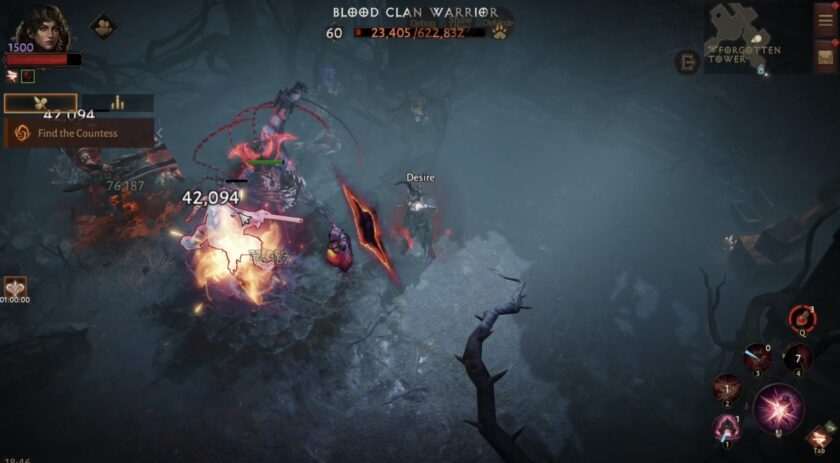
Portals rip through reality. Demonic creatures emerge from the void. Infernal energy floods the battlefield. Every ability reinforces the idea that the Warlock is drawing power from forces that most people in Sanctuary would rather avoid entirely.
Fans of Diablo will immediately recognize the archetype. Blizzard has embraced it wholeheartedly this year, introducing the class through a surprise DLC for Diablo II: Resurrected and once again in the latest expansion for Diablo IV. Diablo Immortal follows the same path, but elevates the experience through its presentation. The class feels more dynamic, more visually striking, and ultimately more complete, allowing its identity to shine in a way that truly brings it to life.
Its abilities are among the most visually impressive currently available in Diablo Immortal, but the effects rarely become overwhelming. Even during larger battles, it remains easy to identify enemy attacks and understand what is happening on screen.
That balance between spectacle and readability is not always easy to achieve, especially in a game where combat can become chaotic within seconds.
Perhaps the most intriguing part of the Warlock is how many directions it seems capable of growing.
Even during a relatively short preview period, there were already signs of meaningful build diversity. Some setups focus heavily on maintaining demonic pressure through summons. Others appear designed around mobility and battlefield control. A few lean into sacrificial mechanics, converting summoned creatures into explosive bursts of damage.
The legendary item interactions are particularly encouraging.
Rather than simply increasing damage values, many of them alter how abilities function. Those are often the most interesting upgrades because they encourage experimentation instead of reinforcing a single dominant playstyle.
It is still too early to determine where the class will ultimately land in the endgame hierarchy, but the foundations are promising.
A Few Questions Remain
The only real concern surrounding the Warlock has less to do with its design and more to do with its long-term balance.
Early community discussions have been overwhelmingly positive regarding the class fantasy and gameplay mechanics, but there are already debates about whether some builds can compete with the most established endgame options.
That conversation feels inevitable whenever a new class enters a mature game with years of existing optimization behind it.
For now, those concerns feel secondary to what the Warlock already accomplishes. The mechanics are compelling. The gameplay loop is satisfying. The class brings fresh ideas to a roster that could easily have started feeling predictable.
Balancing a class is only half the battle. The greater challenge lies in creating one that remains engaging over dozens of hours and keeps fans coming back for more.
Final Thoughts
The Warlock arrives at an important moment for Diablo Immortal.
Four years after launch, the game no longer needs classes that simply fill gaps in the roster. It needs classes that offer players a reason to approach combat differently.
The Warlock does exactly that.
Its portal mechanics create entirely new opportunities during combat. Its demons are active participants rather than passive companions. Its abilities constantly encourage experimentation, adaptation, and creative problem-solving.
Most importantly, it rekindles something that long-running games often struggle to maintain: A sense of discovery.
Even after several days of early access, I was still finding new interactions, new combinations, and new ways to approach encounters. That curiosity kept pulling me back for one more dungeon, one more event, one more attempt to see what the class could do next.
For a game entering its fifth year, that may be the Warlock’s greatest achievement of all.