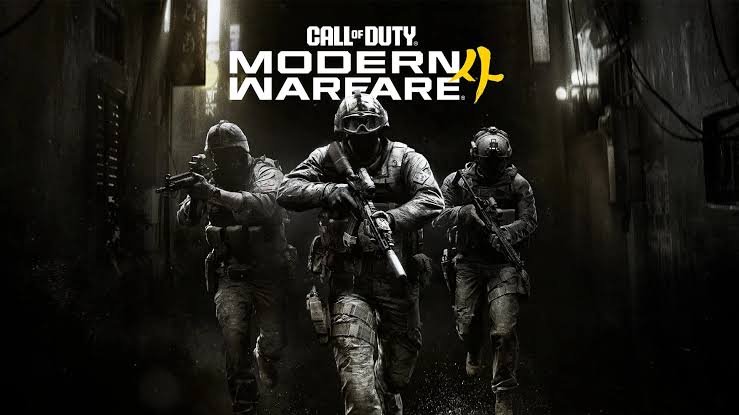
There was a time when Call of Duty was more than just another annual shooter. It was an event. The Modern Warfare trilogy, in particular, helped define an entire generation of first-person shooters, giving us some of the most memorable characters, missions and moments the genre has ever seen. But over the years, as the franchise continued to reinvent itself, revisit familiar ground and chase the demands of an increasingly competitive multiplayer landscape, some of that original identity seemed to get lost along the way.
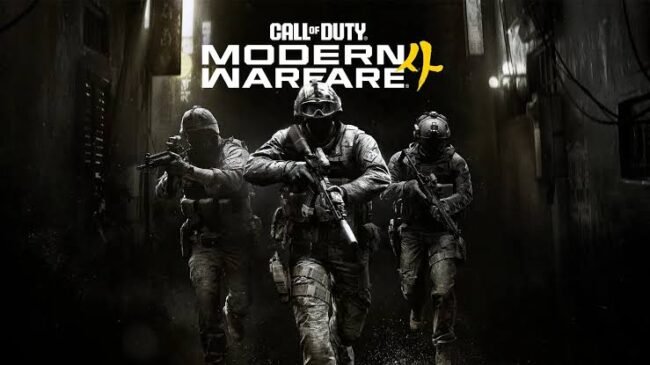
With Modern Warfare 4, Infinity Ward finds itself at an interesting crossroads. The latest instalment takes the conflict to the Korean Peninsula, with a North Korean invasion setting the stage for a much larger international crisis. Players step into the boots of a young South Korean soldier caught in the chaos, while Captain Price, now operating outside the system he once served, pursues a personal vendetta that threatens to complicate an already volatile situation. With familiar faces, a new battlefield and the return of DMZ alongside the traditional multiplayer experience, there is certainly no shortage of ambition here.
But in a franchise that has spent years walking the fine line between nostalgia and reinvention, the real question is whether Modern Warfare 4 manages to give the series a meaningful reason to move forward, or whether we are simply looking at another familiar deployment with a fresh coat of paint.
Let’s find out.
Single Player
For a franchise that has spent the better part of the last few years struggling to figure out what it wants to be, Call of Duty has certainly had its fair share of identity crises. And if there was ever a point where the franchise needed to take a step back and reassess its priorities, it was after Black Ops 7. What should have been another exciting chapter in the long-running Black Ops saga turned into a rather disappointing experiment that seemed more interested in borrowing mechanics from Warzone, throwing in increasingly bizarre boss encounters and accommodating four-player co-op than delivering a compelling single-player narrative. The result was a campaign that felt disjointed, poorly paced and, at times, almost unrecognisable as a traditional Call of Duty experience. There was certainly ambition behind Treyarch’s approach, but ambition without direction rarely makes for a good experience. Between the confusing narrative, repetitive encounters, oversized enemies and the rather questionable decision to make even solo players dependent on an always-online infrastructure, Black Ops 7 managed to miss several of the things that made its predecessors memorable.
It is against this rather disappointing backdrop that Infinity Ward’s Modern Warfare 4 arrives, and thankfully, the difference is almost immediately noticeable. Rather than attempting to reinvent the wheel or shoehorn every conceivable multiplayer mechanic into the campaign, the developers seem to have finally understood that sometimes the best thing you can do with Call of Duty is simply let it be Call of Duty. We are back to a largely traditional, single-player-driven experience, complete with tightly scripted encounters, explosive set pieces, meaningful character interactions and a narrative that actually gives you a reason to care about what happens next. It is a welcome change of direction, especially after the rather uninspired open combat missions of Modern Warfare III and the increasingly experimental approach of Black Ops 7.
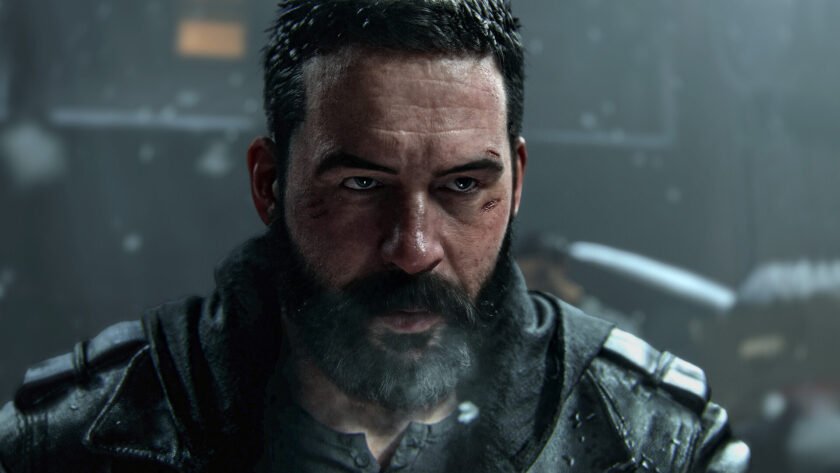
The story takes us to the Korean Peninsula, where a full-scale North Korean invasion of South Korea sets off an international crisis. Interestingly, rather than immediately putting us behind the familiar faces of Task Force 141, Infinity Ward chooses to introduce us to a relatively inexperienced group of South Korean soldiers. We primarily follow Private Park Hyun Jun, a young conscript who is counting down the days until his mandatory military service comes to an end. Unfortunately for him, those plans are quickly thrown into disarray when a routine patrol turns into a fight for survival as the invasion begins. Alongside his fellow soldiers and an American Marine contingent, Park finds himself caught in a conflict far bigger than anything he could have anticipated.
This change in perspective works rather well. We have spent years following hardened operators who can seemingly walk through an entire battlefield without batting an eyelid, so seeing a conflict unfold through the eyes of someone who is experiencing the horrors of actual combat for the first time makes for a refreshing change. The supporting cast also deserves credit, with the camaraderie between the squad members providing some much-needed personality amidst the otherwise grim circumstances. There is a certain vulnerability to these characters that makes their predicament considerably more engaging, and the game does a decent job of making you invested in their survival.
Running parallel to Park’s story is Captain Price’s rather personal mission. Following the events of Modern Warfare III, Price is now operating outside the very system he once served, with General Shepherd’s assassination putting him on the wrong side of those who once considered him an ally. His pursuit of a larger conspiracy takes him across several international locations, eventually bringing his story into direct contact with the conflict unfolding in Korea. While the two narrative threads initially feel quite distinct, their eventual convergence provides the campaign with a much-needed sense of scale. Price’s sections also offer a welcome change of pace, taking us through close-quarter operations, covert infiltrations and some genuinely entertaining action sequences.
One of the more interesting aspects of the campaign is how Infinity Ward balances these two perspectives. On one hand, we have Park and his squad attempting to survive an invasion that is rapidly spiralling out of control. On the other, we have a familiar Captain Price navigating a considerably more personal conflict involving revenge, betrayal and the consequences of operating without any accountability. The contrast gives the narrative enough variety to keep things moving, even if Price’s storyline occasionally feels like it is trying to tie up too many loose ends at once. Given the rather uneven writing of the previous two instalments, however, I appreciate the effort to bring some closure to a story that has been running since the 2019 reboot.
Where Modern Warfare 4 really begins to distinguish itself is in its mission design. The campaign takes us through a variety of locations, ranging from the devastated streets and trenches of South Korea to the bustling streets of New York, high-speed pursuits in Paris and covert SAS operations in Mumbai. There is a good amount of variety in how these missions unfold, and more importantly, they rarely feel like they are simply stretching out an existing multiplayer map to accommodate a single-player objective. Each location has its own atmosphere and purpose, with the developers making good use of the environments to create some memorable encounters.
The game also manages to strike a rather comfortable balance between its traditional linear missions and more open-ended gameplay. There is one particularly expansive mission that gives players considerably more freedom in approaching their objectives. You can explore the surrounding areas, gather resources, clear enemy positions and make use of different equipment to gain an advantage before moving towards the primary objectives. It is a considerably better implementation of the open combat concept than what we saw in Modern Warfare III. Instead of feeling like a collection of disconnected activities placed inside a large map, the mission actually gives you a reason to explore and experiment with your approach. It is not quite a reinvention of the formula, but it is a welcome addition when executed this well.
And that is perhaps the biggest takeaway from the entire experience. Modern Warfare 4 understands when to give players freedom and when to take control of the action. There are still plenty of those trademark Call of Duty moments where everything around you seems to be falling apart, bullets are flying in every direction and the game throws one spectacular set piece after another at you. But these moments are now supported by a campaign that has enough substance to hold everything together. The gunplay feels as satisfying as ever, the firefights have the weight and intensity one would expect from a modern military shooter, and the presentation does an excellent job of making the battlefield feel chaotic without becoming visually overwhelming.
That said, the campaign is not without its shortcomings. The overall experience is relatively short, and some of the narrative developments could have benefited from a little more breathing room. There are also certain moments where the game leans a little too heavily on familiar Call of Duty tropes, and some of the more uncomfortable narrative situations may not sit particularly well with everyone. Price’s storyline, despite having some entertaining moments, also occasionally feels like it is rushing towards its inevitable conclusion. A few technical inconsistencies and frustrating enemy behaviours in the more open-ended sections prevent the gameplay from being entirely seamless.
However, none of these issues fundamentally undermine what Infinity Ward has managed to accomplish here. The campaign is engaging, the mission variety is excellent and, most importantly, there is a genuine sense of progression throughout the narrative. You are not simply moving from one spectacle to another because the game needs another explosive moment to keep you entertained. There is an actual story unfolding, characters worth investing in and consequences that give the action some much-needed context.
Perhaps the greatest compliment I can give Modern Warfare 4 is that it reminded me why I used to look forward to Call of Duty campaigns in the first place. Black Ops 7 felt like a franchise desperately trying to be something it wasn’t, whereas Modern Warfare 4 feels like a developer finally comfortable with what it does best. It isn’t trying to turn every encounter into a multiplayer activity or every mission into an elaborate sandbox experiment. It simply delivers a well-paced military shooter with memorable characters, cinematic action and a story that knows where it wants to go.
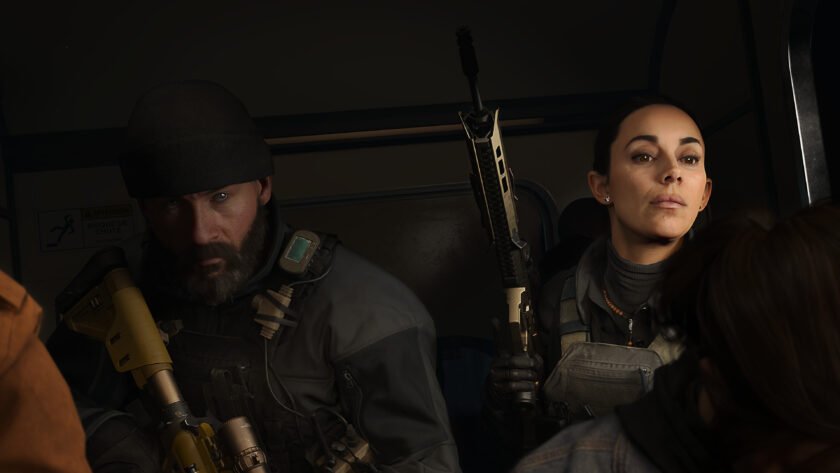
Call of Duty has always been at its best when it combines the spectacle of a Hollywood blockbuster with the immediacy of a well-crafted first-person shooter. Modern Warfare 4 gets that balance remarkably right. It may not be the longest campaign the franchise has delivered, nor does it reinvent the genre, but it does something arguably more important: it restores a sense of purpose to the single-player experience. After years of questionable creative decisions, that alone feels like a victory worth celebrating. For the first time in quite a while, Call of Duty’s single-player campaign feels less like an obligation bundled with the multiplayer package and more like a reason to buy the game in the first place.
DMZ
DMZ is perhaps one of the more interesting parts of the overall package, particularly for those who enjoy something a little different from the usual Call of Duty multiplayer experience. The extraction-based mode has always had a certain appeal, combining traditional firefights with exploration, looting and the constant threat of losing everything you have managed to collect. It is a formula that can be incredibly rewarding when everything falls into place, but equally frustrating when a seemingly straightforward deployment turns into an absolute disaster. Thankfully, its return in Modern Warfare 4 gives players another reason to spend time outside the traditional multiplayer playlists.
For those unfamiliar with the mode, the basic premise is fairly straightforward. You deploy into a hostile environment, complete contracts, take on AI-controlled enemies, collect valuable resources and attempt to extract before another squad gets the better of you. What sounds relatively simple on paper quickly becomes a much more involving experience once other players enter the equation. You never quite know whether the squad approaching your position is looking for a fight, attempting to complete the same objective or simply waiting for an opportunity to take everything you have collected. That uncertainty is a big part of what makes DMZ enjoyable, and it gives even the quieter moments a certain sense of tension.
What I particularly like about this format is how differently it plays compared to regular multiplayer. There is no reason to constantly rush towards the next firefight or chase eliminations for the sake of your scoreboard. Sometimes it is better to take a longer route, avoid unnecessary engagements and concentrate on getting out with whatever valuable equipment you have managed to find. Of course, that doesn’t mean things always go according to plan. There will inevitably be moments when an extraction point becomes a complete warzone, leaving you scrambling for cover while another squad attempts to stop you from leaving. It is these unexpected encounters that make each deployment feel a little different.
The progression system also gives you a reason to keep coming back. Collecting resources, upgrading your equipment and gradually becoming better prepared for subsequent deployments adds a welcome sense of investment. There is something particularly satisfying about successfully extracting after a difficult encounter, especially when you know that losing that equipment would have meant starting all over again. Playing with friends makes the experience even better, as communication and coordination become considerably more important than they are in traditional multiplayer.
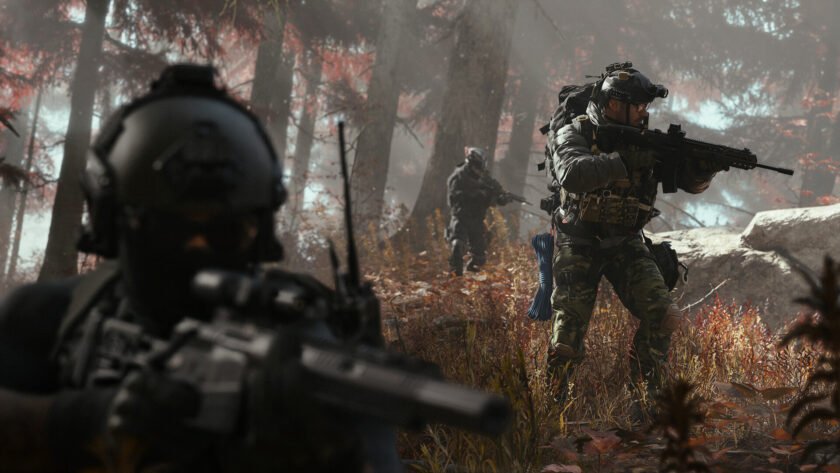
That said, DMZ is not without its frustrations. The experience can occasionally feel overly dependent on squad matchmaking, and running into better-equipped players when you are still trying to get established can be rather discouraging. There is also the familiar issue of balancing AI opponents against human players, particularly when both become involved in the same firefight. These are things Infinity Ward will need to keep an eye on if it wants the mode to maintain a healthy player base over the longer term.
Nevertheless, DMZ is a welcome addition to Modern Warfare 4. It offers something substantially different from the usual Call of Duty formula and provides a more methodical, unpredictable experience that rewards patience just as much as good shooting. It might not be everyone’s cup of tea, but for those willing to invest the time, there is plenty to enjoy here. More importantly, it gives Modern Warfare 4 another dimension beyond its campaign and traditional multiplayer, and I hope Infinity Ward continues supporting it rather than allowing it to become another interesting experiment that gets abandoned after a couple of seasons.
Multiplayer
Multiplayer has always been the bread and butter of Call of Duty. You can have the most entertaining campaign in the world, but for a large section of the player base, it is the multiplayer that determines how long they will stick around. It is also where the franchise has had something of an identity crisis over the last few years. Between the increasingly aggressive movement mechanics, questionable map designs and the seemingly endless attempts to reinvent established game modes, there have been times when it felt like Call of Duty was trying a little too hard to keep up with itself. Thankfully, Modern Warfare 4 feels like a bit of a course correction.
The first thing I noticed was how much more grounded the movement feels. This isn’t to say that the game is slow by any means. Sliding, sprinting, mantling and climbing are all very much part of the experience, but there is a certain restraint to how these mechanics have been implemented. You cannot simply throw yourself around a corner and expect movement alone to win you a gunfight. Positioning and timing matter, and there is a little more thought involved in how you approach an engagement. Personally, I quite like this direction. I have never been particularly fond of movement becoming the defining factor in a firefight, especially when it starts looking more like an acrobatic competition than a military shooter.
And then there is the gunplay. This is where Infinity Ward really knows what it is doing. Weapons feel punchy, recoil patterns are satisfying to learn and there is a noticeable difference in how individual firearms handle. The revised ballistic system adds another layer to this, with weapon handling and muzzle positioning playing a more prominent role. It doesn’t completely change the way you approach combat, but it does make the shooting feel a little more deliberate. The time-to-kill is also fairly comfortable, although there will inevitably be moments when you question how you managed to lose a gunfight that you were convinced you had won.
There are 33 weapons available at launch, and the Create-a-Class system offers enough flexibility to keep you experimenting with different loadouts. The new Apex Attachments are an interesting addition, allowing certain weapons to be modified in ways that go beyond the usual barrel, grip and optic combinations. Not every attachment is particularly useful, and I suspect most players will eventually settle on a handful of familiar configurations, but it is nice to have the option. Weapon progression also feels less cumbersome, which is always appreciated when you are trying to level up multiple guns.
Map design, however, is a slightly more complicated conversation.
Modern Warfare 4 launches with twelve traditional 6v6 maps, alongside dedicated Ground War and Gunfight arenas. There is a decent amount of geographical variety, with locations taking us through the streets of Mumbai and South Korea, industrial facilities and several urban environments. Silkworm is one of the more interesting additions, with its shopping district, narrow alleyways and opportunities for flanking. Lotus and Rooftops also have their moments, particularly if you enjoy maps that offer multiple routes and a bit of verticality.
Not everything works quite as well. Some maps feel unnecessarily restrictive, while others have sightlines that can make certain engagements rather frustrating. There are also instances where the action becomes a little too chaotic, particularly around heavily contested choke points. I found myself enjoying some maps considerably more than others, and I suspect this will be one of those things that becomes increasingly apparent once the initial excitement wears off.
One addition I particularly enjoyed was Kill Block. Primarily designed around Gunfight, the modular arena can change its layout between rounds, creating hundreds of possible configurations. This means that you cannot always rely on the same routes, sightlines or cover positions, and you have to adapt as the match progresses. It is a fairly straightforward idea, but it works. Gunfight has always been one of my favourite alternatives to the regular multiplayer playlists, and having an arena that actively changes the way you approach each round makes things considerably more interesting. I would actually love to see Infinity Ward experiment with this concept on a larger scale.
As far as game modes go, most of the familiar favourites are here. Team Deathmatch, Domination, Hardpoint, Kill Confirmed and Search and Destroy make their return, alongside a few new additions. Inflation is an interesting spin on elimination-based gameplay, where players collect cash from defeated opponents. The more money you carry, the more visible you become to the opposing team. It creates some rather amusing situations where players have to decide whether to hold on to their earnings or risk going after another elimination.
Hijack introduces an objective-based mode involving a Data Spike that needs to be delivered to the opposing team’s Comm Station. It is a nice change from the usual run-and-gun approach, although I am not entirely convinced it will become a permanent favourite among the community.
Collateral, on the other hand, caught my attention. Taking some inspiration from Search and Destroy, it introduces a buy phase where players can spend money earned through eliminations and objective play on weapons and equipment for subsequent rounds. There are no respawns and no custom loadouts, so you have to be a little more careful about how you approach each round. It adds a tactical element that I think works rather well, especially for players who enjoy the slower, more methodical side of multiplayer.
Ground War also returns, this time with Combat Outpost. The larger-scale battles offer a welcome change of pace from the usual 6v6 engagements, with additional territorial control and reinforcement mechanics thrown into the mix. I have always had a soft spot for Ground War, although its enjoyment is heavily dependent on how seriously your teammates take the objectives. There is only so much fun to be had when half your team is busy chasing kills on the other side of the map.
Of course, it wouldn’t be a modern Call of Duty multiplayer experience without a few familiar frustrations.
Matchmaking continues to be a contentious subject, and Modern Warfare 4 hasn’t entirely escaped the conversation surrounding skill-based matchmaking. I understand the reasoning behind trying to create balanced lobbies, but there is a point where every match starts feeling like a competitive tournament. Sometimes you just want to come home, switch on your console and play a few casual matches without feeling like you are being tested for a professional esports team. Not every lobby needs to be an exercise in endurance.
Spawn behaviour can also be frustrating, particularly on some of the smaller maps. There are occasions when you find yourself respawning directly into an ongoing firefight or in the immediate vicinity of an opposing player. It can quickly turn into an irritating cycle, and while these issues are not necessarily present in every match, they are noticeable enough to warrant attention.
I also have some reservations about how long the initial content offering will hold up. Twelve maps are a reasonable starting point, and there is enough variety in the available modes to keep most players occupied. But a lot of the experience is still built around familiar foundations. That isn’t necessarily a bad thing, and I would much rather have a well-executed traditional mode than something introduced simply for the sake of marketing. Still, I would have liked Infinity Ward to take a few more chances, particularly considering how much the franchise has experimented with its multiplayer over the years.
Despite these issues, I have found myself enjoying Modern Warfare 4’s multiplayer considerably more than I expected. There is something comforting about jumping into a match, picking up a familiar assault rifle and getting straight into the action without having to worry about a dozen unnecessary mechanics. The shooting feels great, the movement is more measured and the new modes offer enough variety to keep things interesting. It isn’t perfect, and there are certainly areas that need some attention, but the fundamentals are in a pretty good place.
Perhaps that is what I appreciate most about this particular outing. After spending so much time watching Call of Duty experiment with its own identity, it is refreshing to see a game that doesn’t seem particularly interested in proving how different it can be. Sometimes all you really need is a good map, a dependable weapon and a lobby full of people who are just as determined to get that next kill as you are. Modern Warfare 4 understands that feeling, and for now, that is more than enough to keep me coming back.
Visuals and Audio
Call of Duty has rarely struggled to look expensive. Even its weaker entries tend to have the production values of a major Hollywood action film, and Modern Warfare 4 is no exception. But what I appreciate here is that Infinity Ward has put a little more thought into how the visuals serve the experience, rather than simply throwing explosions and particle effects at the screen and hoping nobody notices what is happening underneath.
The Korean setting gives the campaign plenty of opportunities to show off. The contrast between ordinary city life and the sudden destruction brought by the invasion is particularly effective. Seoul feels like a place people actually live in before the shooting begins, and that makes the transition into full-blown warfare all the more striking. New York and Paris offer their own visual identity, while the smaller, more enclosed environments benefit from the game’s detailed lighting and atmospheric effects.
There is a lot to admire in the finer details too. Weapon models, character faces, animations and environmental textures are all up to the standard you’d expect from a big-budget Call of Duty release. Explosions throw debris across the screen, smoke hangs over the battlefield, and the lighting does a particularly good job of selling the chaos during larger encounters. The game can look genuinely spectacular when everything comes together.
That said, it isn’t completely flawless. There are moments where texture loading becomes noticeable, and some of the more demanding action sequences can suffer from frame-rate dips. These aren’t issues that ruin the experience, but they do stand out in a game that otherwise looks so polished.
The audio is where Modern Warfare 4 really starts to pull you into its world. Infinity Ward has clearly put considerable effort into making the battlefield sound as chaotic as it looks. Gunfire has a satisfying weight to it, explosions feel appropriately massive, and the surrounding environment does a lot of the storytelling. You can hear the difference between the relative quiet of a tense approach and the absolute mess that follows when a firefight breaks out.
Weapon audio deserves a special mention. Every shot has a distinct punch, with the mechanical sounds of reloading and handling adding to the overall feel of the arsenal. This is particularly important in multiplayer, where audio cues can make the difference between anticipating an enemy and being caught completely off guard. The sound design gives firefights a convincing sense of depth, and it is something I found myself appreciating throughout both the campaign and multiplayer.
The soundtrack does its job without constantly demanding attention. It knows when to build tension, when to step back and let the environment take over, and when a larger musical cue is needed to sell the scale of a moment. The voice work is equally important, particularly in a campaign that moves between different perspectives and has to make its characters feel grounded in the middle of a fairly ridiculous global conflict.
I wouldn’t call the visual presentation a revolutionary leap for the franchise. We’ve reached a point where Call of Duty is expected to look this good, and Modern Warfare 4 largely meets those expectations. But the combination of detailed environments, convincing weapon presentation, strong lighting and excellent sound design gives the game the kind of blockbuster presentation that the series has built its reputation on. There are technical blemishes, certainly, but when the campaign gets going and the audio and visuals work together, it is hard not to get swept up in it.
Final Thoughts
Call of Duty: Modern Warfare 4 feels like a much-needed reminder of what makes this franchise so enjoyable. The single-player campaign delivers the kind of cinematic action and storytelling that had been missing, while multiplayer gets the fundamentals right without trying too hard to reinvent the formula. The visuals and audio further reinforce an experience that feels polished and genuinely entertaining. It isn’t without its shortcomings, and there are areas that could certainly use more attention, but I walked away feeling considerably more satisfied than I have with some of the recent entries. Sometimes going back to basics really is the best way forward.
9/10