I’ve been gaming for a long time. Over the years, I’ve seen franchises rise to greatness, fade into obscurity, and, on rare occasions, reinvent themselves for a new generation. The gaming landscape has changed dramatically, but few series have managed to remain as relevant as Assassin’s Creed.
After reinventing itself as an open-world RPG with Origins, Odyssey, and Valhalla, Ubisoft briefly returned to the franchise’s stealth-driven roots with Mirage. Now, the series has entered yet another chapter with its first full-fledged remake, or more fittingly called a “Resync.”
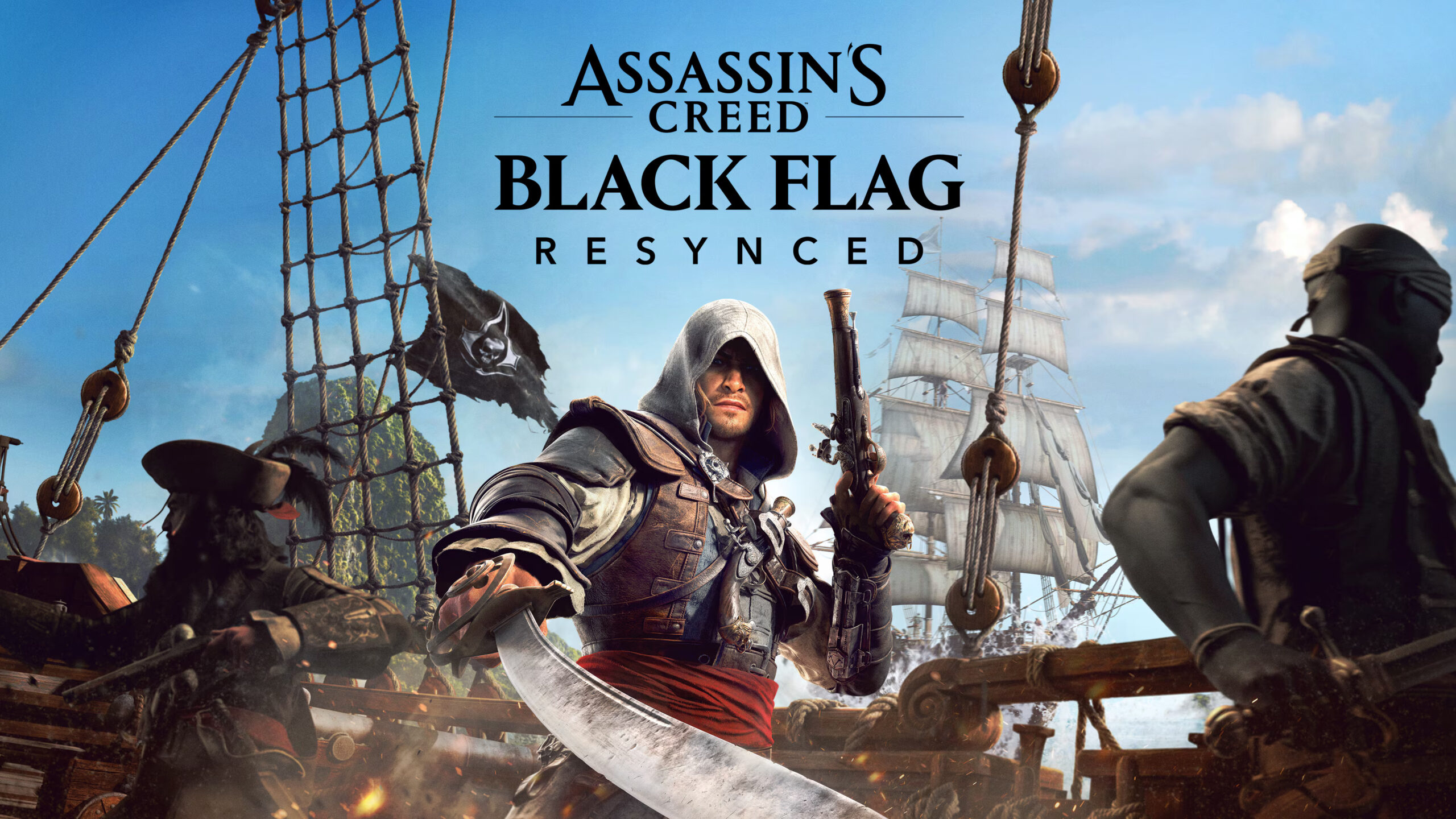
Assassin’s Creed Black Flag Resynced is a modern reimagining of what I still consider the pinnacle of the franchise, alongside Assassin’s Creed Brotherhood. More than a visual overhaul, it revisits one of gaming’s greatest pirate adventures for a new generation while reminding longtime fans why Edward Kenway’s journey has remained so beloved for over a decade.
Story
If there’s one thing that the old Assassin’s Creed games have always excelled at, it’s telling a deep story with compelling, well-written characters. Black Flag manages to stand on it’s own in this regard. Unlike many entries in the franchise, where the Assassin-Templar conflict takes center stage, Black Flag begins as a pirate’s tale. Edward Kenway isn’t a Master Assassin or a reluctant hero destined to save the world. He’s a selfish man chasing fortune, freedom, and glory. That simple motivation is what makes him one of the franchise’s most compelling protagonists.
Watching Edward evolve from an opportunistic privateer into someone who finally understands the meaning of responsibility remains one of Ubisoft’s finest character arcs. His journey never feels forced. Every triumph, every betrayal, and every loss shapes him into a better man, making the emotional payoff just as impactful today as it was over a decade ago.
The supporting cast is equally exceptional. Historical figures like Blackbeard, Charles Vane, Anne Bonny, Benjamin Hornigold, and Mary Read are woven seamlessly into the narrative, blurring the line between history and fiction. Rather than feeling like cameos, they become fully realized characters with ambitions, flaws, and memorable personalities. By the time the credits roll, you genuinely feel like you’ve witnessed the rise and fall of the Golden Age of Piracy.
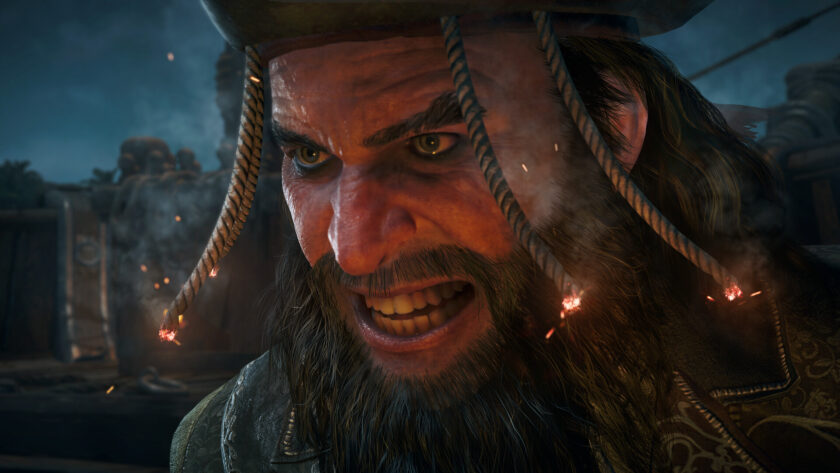
Thankfully, Black Flag Resynced understands what made the original story so beloved. Ubisoft wisely resists the temptation to rewrite Edward’s journey. Instead, the remake expands upon it with additional missions and character-focused storylines that flesh out fan-favorite pirates like Blackbeard and Stede Bonnet while introducing three recruitable officers who become part of the main adventure. These additions never overshadow the original narrative; instead, they add welcome depth to the world and its characters without disrupting the pacing.
Several missions have also been redesigned. Some of the infamous tailing sequences now offer multiple ways to succeed instead of forcing an instant desynchronization upon failure, investigations replace a few repetitive objectives, and assassination missions include optional discoveries that reveal more about their targets. These changes make the campaign feel fresher for returning players while preserving the spirit of the original.
Not every narrative decision lands perfectly, however. One of the remake’s most controversial changes is the removal of the original modern-day Abstergo Entertainment storyline. While those sections weren’t universally loved, they helped tie Edward’s memories into the broader Assassin’s Creed mythology and provided an interesting change of pace. Their absence makes the overall experience feel slightly more isolated from the rest of the series, and longtime fans may find that loss disappointing.
Even so, the heart of Black Flag remains untouched. Edward Kenway’s story is still one of the finest narratives Ubisoft has ever written, and it’s not because it’s about Assassins, Pieces of Eden, or ancient conspiracies, but because it’s ultimately about ambition, regret, friendship, and redemption.
Gameplay
Even after all these years, Black Flag remains one of the most unique entries in the Assassin’s Creed franchise because it refuses to be just an Assassin’s Creed game. It’s a pirate simulator wrapped in an Assassin’s Creed narrative, and that identity is still its greatest strength.
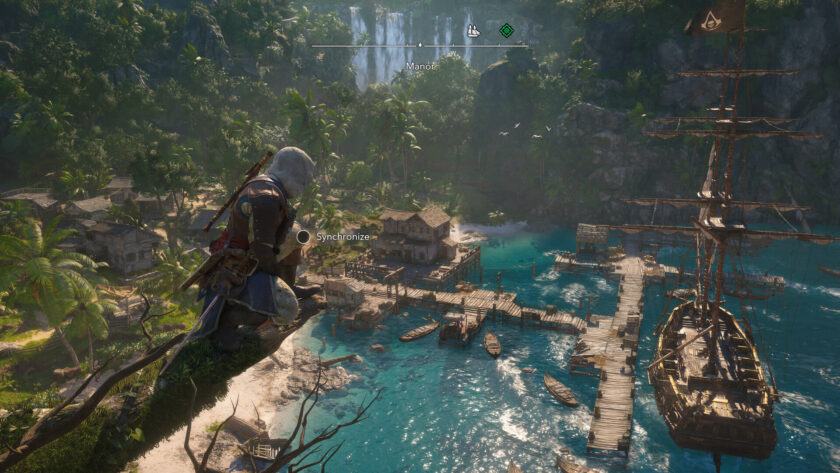
Exploration is where the game truly shines. Sailing across the Caribbean aboard the Jackdaw is every bit as exhilarating as it was in 2013. Every island, shipwreck, hidden cave, and uncharted cove encourages you to abandon the main story and simply see what’s over the horizon. Few open worlds manage to capture that sense of adventure as naturally as Black Flag.
Naval combat remains the undisputed star of the experience. Cannon broadsides, chain shots, mortar strikes, swivel guns, and boarding enemy vessels combine to create encounters that are as tactical as they are cinematic. Upgrading the Jackdaw continues to feel meaningful, with every improvement making tougher naval battles noticeably more manageable. Even after dozens of hours, hunting legendary ships and engaging in massive sea battles never loses its appeal.
Resynced modernizes nearly every aspect of the gameplay without compromising its identity. Movement feels noticeably smoother, borrowing refinements from more recent Assassin’s Creed titles. Stealth has received one of the biggest overhauls, with manual crouching finally making its way into Black Flag. While it may seem like a small addition, it offers far greater control during infiltrations than the original’s context-sensitive stealth system ever did. Enemy AI has also been updated to react more dynamically to visibility, sound, and changing weather conditions, making stealth encounters feel more engaging.
Combat has arguably seen the most significant redesign. Gone is the simplistic counter-and-kill formula of the original. Resynced introduces heavier attacks, stun mechanics, expanded enemy behaviors, and a combat flow that demands a little more timing and positioning. Some players will appreciate the added depth, while others may miss the fast, cinematic rhythm that made the original combat so satisfying. Personally, I found the new system enjoyable, but not necessarily superior. It adds complexity without always matching the fluidity of its predecessor.
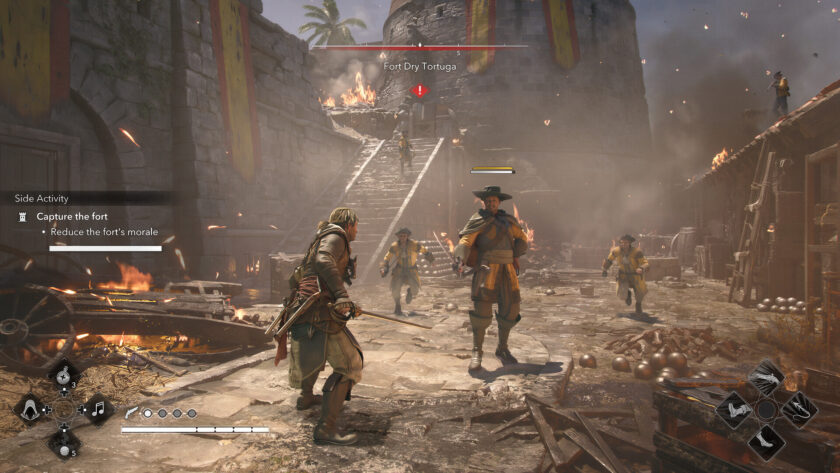
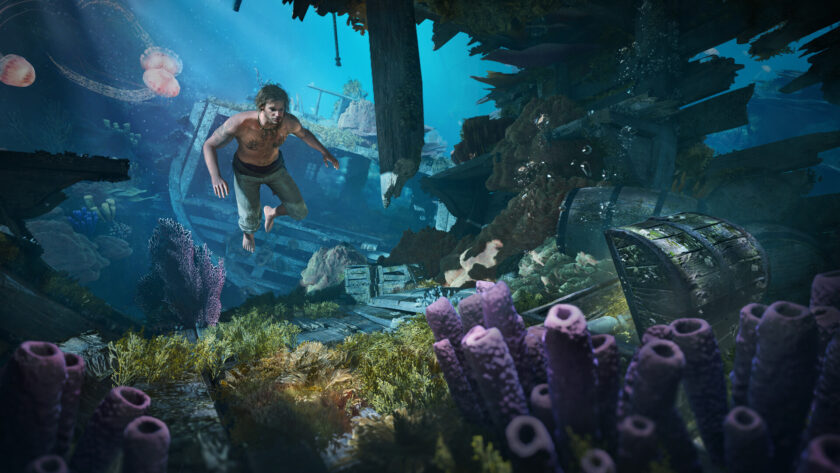
Several mission types have also been reworked. The notorious tailing missions are less restrictive, objectives provide more freedom, and new officer recruitment missions add meaningful side content that ties into ship management. Exploration has been expanded with additional areas, more seamless underwater traversal, and a significantly improved Great Inagua headquarters that evolves alongside Edward’s journey.
That said, some of the original game’s shortcomings remain. Resource gathering can become repetitive, certain collectibles still feel excessive, and a handful of missions continue to rely on dated design philosophies. Ubisoft has smoothed many of the rough edges, but it hasn’t completely modernized every aspect of the experience.
Even with those flaws, Black Flag Resynced delivers one of the most enjoyable gameplay loops in the franchise. Whether you’re stalking targets through bustling cities, diving into underwater ruins, hunting whales, capturing forts, or simply listening to your crew sing sea shanties as the Jackdaw cuts through the waves, there’s an infectious sense of freedom that few games have managed to replicate.
Visuals, Audio & Technical Performance
There is no better way to describe Assassin’s Creed Black Flag Resynced than as a technical showcase for Ubisoft’s latest Anvil engine. While the original Black Flag was already a beautiful game for its time, this remake elevates every aspect of its presentation to modern standards without losing the charm that made the Caribbean so memorable.
The Caribbean has never looked this breathtaking. Every island is bursting with detail, from dense jungles and bustling colonial towns to sun-soaked beaches and hidden coves. The latest version of the Anvil engine introduces fully dynamic lighting, ray-traced global illumination, physically based rendering, and continuous geometry streaming that virtually eliminates visible level of detail transitions. The result is a world that feels remarkably natural, whether you are exploring Havana’s crowded streets or climbing a remote Mayan temple.
The ocean remains the game’s greatest visual achievement. Waves crash realistically against the Jackdaw, storms build gradually on the horizon, and cannon fire fills the air with thick smoke and splintering wood. The new weather simulation does more than improve visuals. Wind, rain, fog, and changing sea conditions all contribute to making every voyage feel unique. It is one of the finest implementations of water physics and weather effects currently available on the PS5.
Character models have also received significant attention. Faces are more expressive, clothing reacts naturally to movement and wind, and environmental details extend far beyond what was possible in the 2013 release. Familiar locations are instantly recognizable, yet they feel completely rebuilt rather than simply remastered.
The audio is equally impressive. Brian Tyler’s phenomenal soundtrack continues to deliver some of the best music in the franchise, perfectly capturing both the excitement of naval warfare and the quieter emotional moments of Edward’s journey. Environmental audio has also seen a noticeable improvement. The crashing of waves, the thunder of broadsides, and the creaking of the Jackdaw create an incredibly immersive soundscape. When paired with the PS5’s Tempest 3D Audio and Dolby Atmos support, sailing across the Caribbean feels more authentic than ever. Of course, no discussion of Black Flag would be complete without mentioning the sea shanties. Hearing your crew break into song while crossing the open sea is still one of gaming’s most iconic experiences.
On the PlayStation 5, players can choose between Performance, Fidelity, and Balanced graphics modes. I spent the majority of my time in Performance mode, and it is the one I would recommend. The 60 FPS target makes combat, parkour, and naval exploration significantly smoother while still retaining excellent image quality. Fidelity mode delivers additional visual enhancements but sacrifices responsiveness, while Balanced mode offers a compromise for displays that support 120 Hz.
Performance on the PS5 is generally excellent. Loading times are almost instantaneous thanks to the console’s SSD DualSense haptic feedback and adaptive triggers add subtle but effective immersion during combat and sailing, and I encountered only a handful of minor visual glitches throughout my playthrough. A few animation hiccups and occasional AI oddities still exist, but none were severe enough to impact my overall enjoyment.
Assassin’s Creed Black Flag Resynced is exactly what a remake should be. It respects the visual identity of the original while taking full advantage of current-generation hardware. The Anvil engine has never looked better, and the PS5 delivers an experience that feels both technically impressive and effortlessly immersive. It is a stunning reminder that some classics simply deserve to be experienced again.
Final Thoughts
Assassin’s Creed Black Flag Resynced is a remake done right. Ubisoft preserves everything that made Edward Kenway’s adventure unforgettable while modernizing its gameplay, visuals, and presentation for a new generation. The Caribbean has never looked better, the naval gameplay remains unmatched, and the story is just as compelling today as it was in 2013.
Some dated mission design still persists, the new combat may not appeal to everyone, and the removal of the modern day storyline is disappointing. Even so, these shortcomings do little to diminish an outstanding experience.
9/10