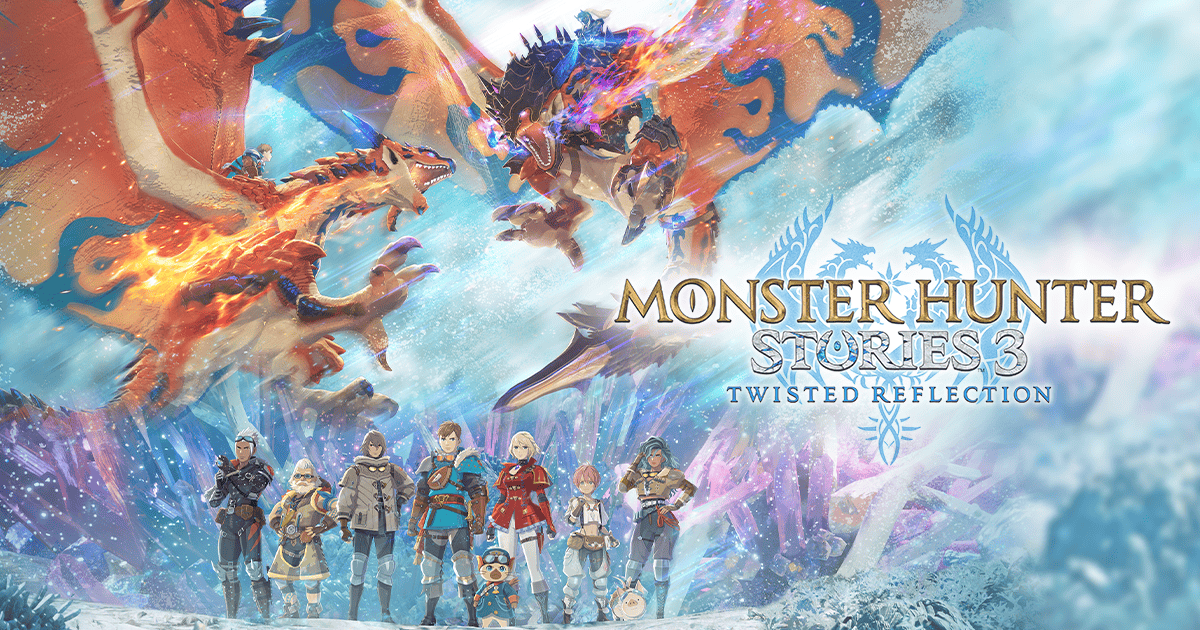
Ever since Monster Hunter Stories first reimagined Capcom’s methodical hunting formula into something more character-driven, the series has felt a bit caught in between. It was less intense than the mainline games, but it never quite matched the depth of the turn-based RPGs it clearly took inspiration from. Monster Hunter Stories 2: Wings of Ruin definitely moved things forward, but it still felt like it was playing it safe, stuck between being accessible and being truly deep.
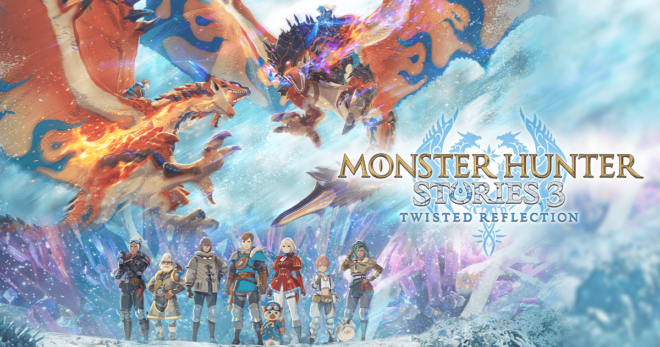
With Monster Hunter Stories 3: Twisted Reflection, that hesitation finally starts to disappear. This feels like a game that knows exactly what it wants to be. It leans more confidently into its story, builds on its systems in meaningful ways, and for the first time, feels like it is trying to stand alongside the RPGs it has been compared to rather than just follow in their footsteps.
Story
If Stories 3 marks a turning point for the series, it’s largely because of how much more confident it feels in its storytelling.
Set in a world strained by environmental collapse and political tension, Monster Hunter Stories 3: Twisted Reflection follows a new Rider whose journey quickly becomes entangled in a conflict between two nations, and the mystery of a pair of Rathalos whose existence ties back to an old war. It’s a familiar setup on paper, but what stood out to me was how seriously the game commits to it.
There’s a noticeable shift in tone here. Earlier entries like Monster Hunter Stories 2: Wings of Ruin leaned heavily into a lighter, almost coming-of-age adventure. This time, the writing carries more weight. Themes of legacy, ecological imbalance, and the consequences of human ambition aren’t just background flavor -actively shape the characters and their motivations.
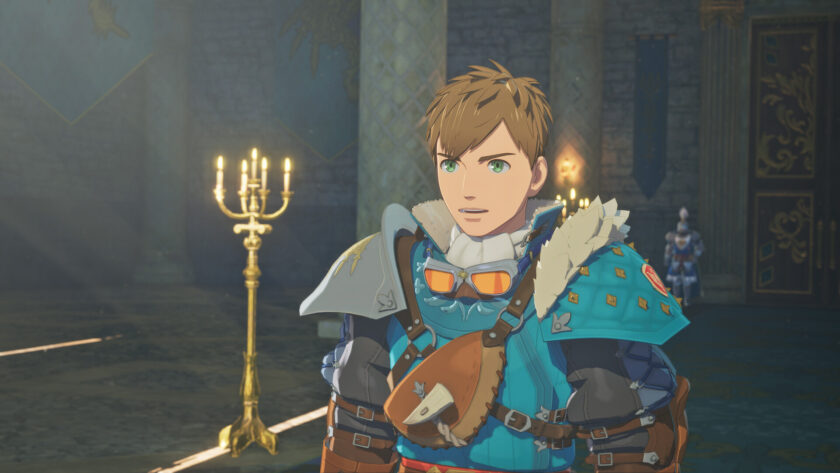
That said, it doesn’t completely abandon the series’ roots. There’s still a sense of optimism running through it, and the bond between Rider and Monstie remains central. But now, that bond feels more tested, more meaningful, because the world around it is less forgiving.
Not every beat lands perfectly. Some side characters fall into familiar archetypes, and the pacing can drag in the middle chapters where the narrative takes a backseat to exploration. But when it focuses, especially in its key emotional moments—it delivers something the series has been building toward for years: a story that feels worth investing in, not just one that moves you from one battle to the next.
Gameplay
The first thing that still sets the Stories series apart is just how different it feels from mainline Monster Hunter. Where games like Monster Hunter: World or Monster Hunter Rise are built around real-time combat and mechanical execution, Monster Hunter Stories 3: Twisted Reflection leans fully into turn-based strategy. What stood out to me this time is how much closer it gets to feeling like a proper system-driven RPG instead of just a simplified spin-off.
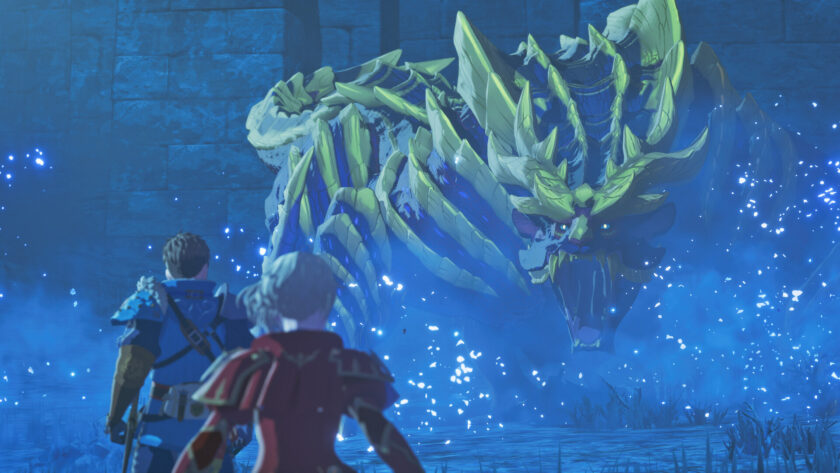
The biggest shift comes from how all of its systems connect with each other. The headline addition, Habitat Restoration, fundamentally changes the gameplay loop. Instead of just stealing eggs and building your roster, you are actively rebuilding ecosystems by rescuing endangered species and releasing them back into the wild. Doing this raises a region’s Ecosystem Rank, which then unlocks rarer monsters, better eggs, and even new variants.
This is not just a cosmetic change. It directly affects progression. Stronger Monsties are not simply found, they are earned by improving the world itself. It creates a loop where exploration, combat, and collection all feel tied together in a way the earlier games never quite managed.
That system also feeds into one of the more interesting additions, mutations and dual-element Monsties. As ecosystems stabilize, monsters can evolve into stronger forms or gain hybrid elemental traits depending on where they grow. It is a smart twist on the traditional gene system, and it makes experimentation feel worthwhile. You are not just min-maxing stats, you are shaping outcomes.
Combat has also seen its most meaningful overhaul yet. The familiar Power, Speed, and Technical triangle is still here, but it now sits on top of new mechanics that make fights feel more dynamic. There is a separate stamina system for Riders, so your abilities are no longer tied to the same resource as your Monstie’s kinship skills. This keeps battles moving at a better pace.
On top of that, enemies now have breakable body parts and a willpower-style gauge, which opens them up to knockdowns and follow-up damage windows. It adds a layer of planning that was missing before, especially in tougher fights.
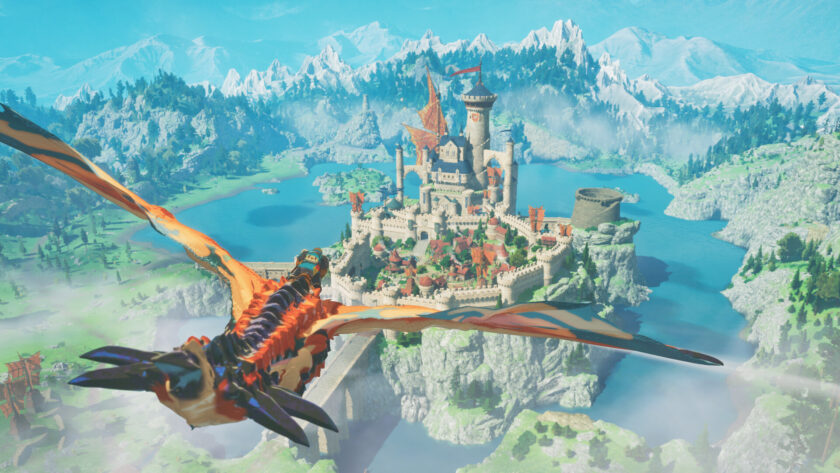
The standout addition is Synchro Rush, a high-damage team attack that triggers once you build enough momentum or topple an enemy. It gives combat a stronger sense of rhythm. Instead of just reacting turn by turn, you are building toward bigger moments. It finally makes boss fights feel like proper multi-phase encounters rather than extended pattern recognition.
Customization has also been expanded across the board. Monstie building is deeper thanks to revised gene systems and new Egg Skills, which tie abilities directly to your ecosystem progress. At the same time, equipment now features gem slots, separating weapon-based active skills from armor-based passive bonuses. It sounds like a small change, but it opens up much more flexibility in how you build your team.
Even exploration feels more connected. New Riding Actions like climbing, gliding, swimming, and aerial traversal are not just movement tools. They feed into combat advantages and environmental interaction. It makes the world feel more cohesive, where traversal, combat, and progression all support each other instead of feeling like separate systems.
That said, not everything lands perfectly. The core loop can still become repetitive, especially in the middle hours when restoring ecosystems starts to feel routine. And while the systems are deeper, the game does not always push you to fully engage with them unless you go looking for tougher challenges.
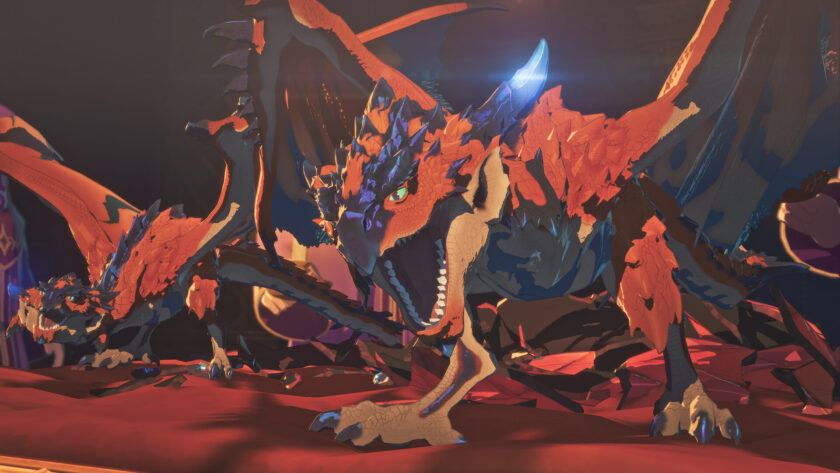
Even so, this is easily the most mechanically rich the series has been. What once felt like a lighter alternative to Monster Hunter now feels like its own fully realized RPG, where every system has a purpose and connects back into the larger experience.
Visuals and Audio
One of the most immediate improvements in Monster Hunter Stories 3: Twisted Reflection is just how much more modern it looks and sounds. Where earlier entries still showed clear signs of their handheld origins, this feels like a proper step into current-generation presentation.
Visually, the jump is hard to miss. Environments are brighter, denser, and far more alive, with small touches like insects moving through foliage or subtle environmental animations giving each area a stronger sense of motion. Battles benefit just as much. Animations are more expressive, and Kinship attacks now feel like full set-piece moments instead of simple finishers. It all runs on Capcom’s RE Engine, and that added polish shows in the overall consistency.
That said, it is not without its flaws. Monster designs and animations are strong across the board, but there is still some repetition in encounters, and the overall visual fidelity does not always match the game’s ambition, especially when compared to Capcom’s bigger titles. Even so, the art direction carries it. The anime-inspired style is still intact, just elevated with better technology behind it.
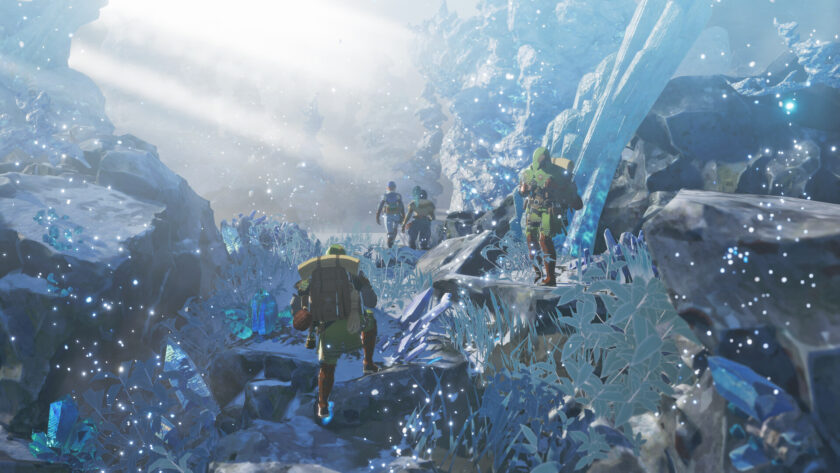
On the audio side, this is easily the most refined the Stories series has been. Sound design has more impact this time around. Attacks land with weight, movement sounds feel sharper, and environmental audio does a lot to make the world feel more grounded.
The soundtrack stays true to the identity of the broader Monster Hunter series. It blends orchestral themes with more atmospheric tracks, and while it does not try to reinvent the formula, it remains consistently strong. Boss themes stand out the most, adding tension and energy to key fights, while quieter tracks give exploration room to breathe.
Voice acting is another noticeable step forward. Performances are solid across the board and do a better job of supporting the game’s more serious tone, something earlier entries did not always manage.
The only real drawback is that the audio plays things a bit safe. It leans heavily on familiar Monster Hunter motifs instead of carving out a more distinct identity for Stories. Still, when the execution is this consistent, it is a minor complaint.
Conclusion
Monster Hunter Stories 3: Twisted Reflection feels like the moment this spin-off finally comes into its own. For the first time, it is not just riding on the appeal of the main series or the novelty of its premise. It stands on its own as a fully realized RPG with a clear identity.
It is not perfect. The pacing can drag, some repetition still creeps in, and a few missing features hold it back from being something truly exceptional. But even with those issues, it is hard to ignore just how much of a step forward this is.
In a series that has often felt like a side project, this is the first time it genuinely feels like a pillar. And if this is the direction Stories is heading in, it is finally worth putting it in the same conversation as the games it has been quietly building towards for years.
9/10