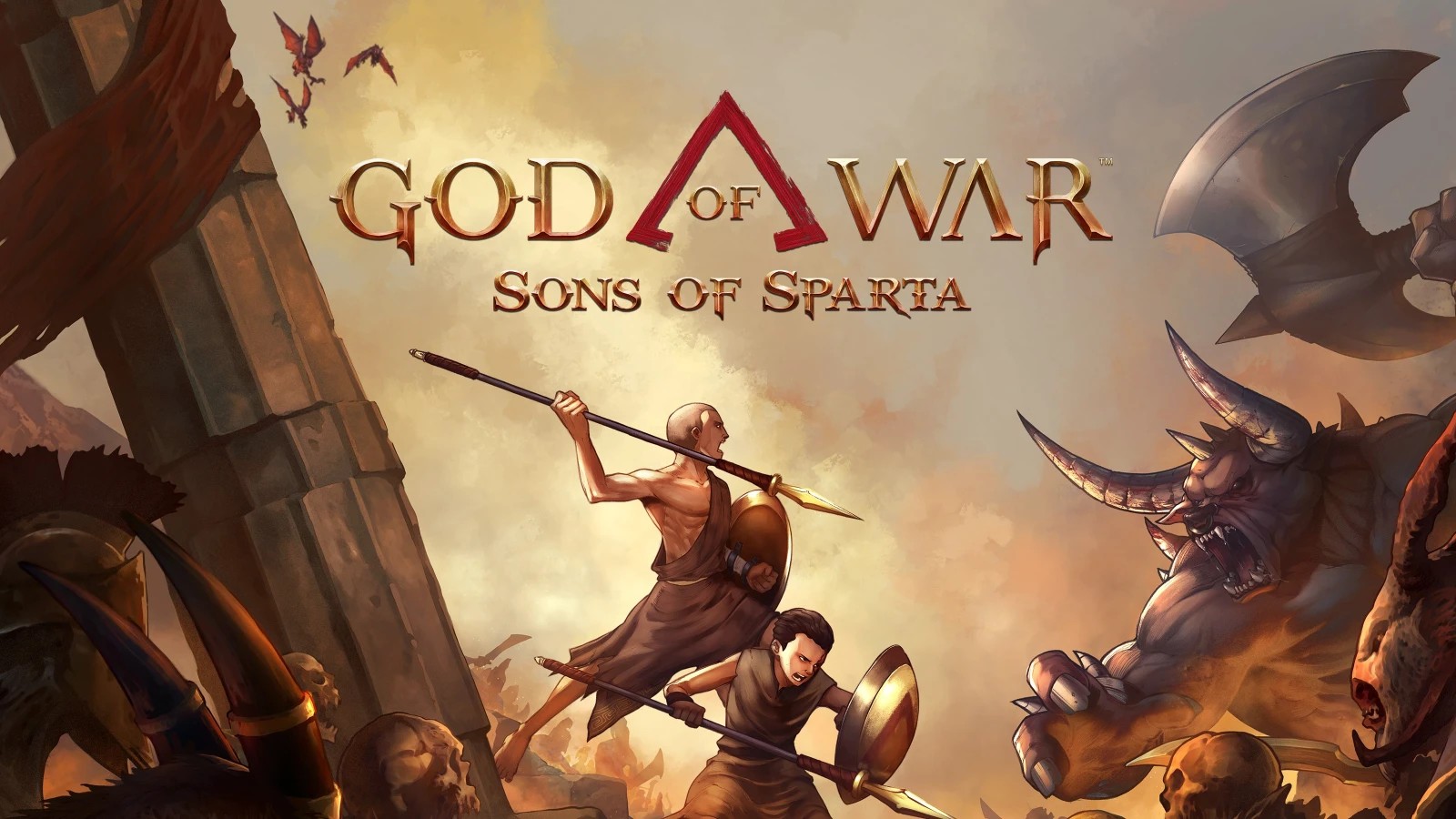
There’s a particular weight that comes with the name God of War. It isn’t just the memory of chaos blades carving through Olympian flesh or the quiet ache of a father trying, and failing, to outrun his past. It’s expectation. For nearly two decades, the series has trained us to brace for spectacle, for operatic violence, for mythologies collapsing under the fury of one man. So when God of War: Sons of Sparta was announced, not as the next sweeping cinematic epic but as a smaller, more focused tale rooted in Kratos’ earliest years, curiosity mingled with skepticism in equal measure.
This isn’t the Kratos we met on the snowy slopes of Midgard, nor even the broken anti hero clawing his way through Olympus. This is a boy, hardened, yes, but unformed. Angry without direction. Powerful without purpose. Sons of Spartapulls us back to the brutal cradle of Spartan upbringing, where childhood is a weakness to be beaten out and brotherhood is both shield and burden. In doing so, the game shifts the emotional lens of the franchise. It trades god slaying bombast for something rawer and more intimate, the forging of identity under relentless pressure.
Story
The story of God of War: Sons of Sparta lives in the shadow of inevitability. We know what Kratos becomes. We know the gods he will defy, the family he will lose, the world he will set ablaze. That foreknowledge hangs over every scene like a storm cloud, and the game leans into that tension rather than trying to escape it. This is not a tale about surprise. It is a tale about formation.
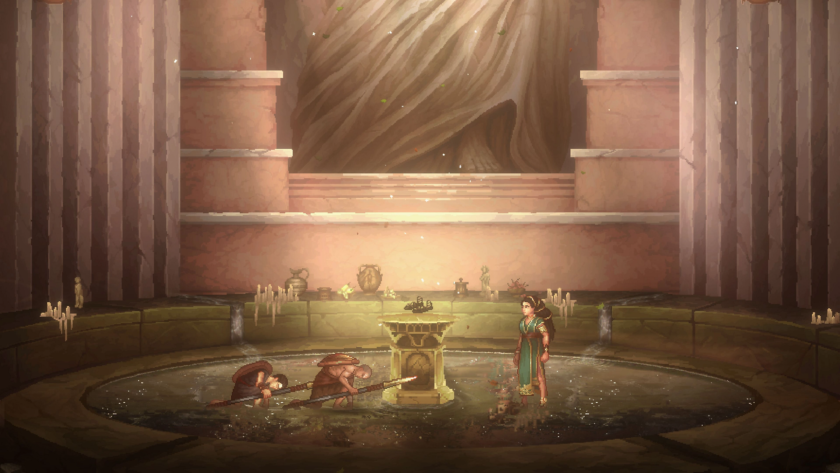
At its core, Sons of Sparta is a story about conditioning. The Agoge is not simply a backdrop but the crucible in which identity is stripped down and reforged. The early chapters are deliberately uncomfortable. Discipline borders on cruelty. Camaraderie is fragile and transactional. Strength is rewarded, vulnerability punished. Through this environment, we see a younger Kratos who is volatile and fiercely protective, especially when it comes to Deimos. The game does an admirable job portraying him not as the fully realized engine of vengeance we remember, but as someone still wrestling with fear and inadequacy.
The relationship between the brothers is the emotional anchor. Deimos is not written as a passive shadow but as a mirror. Where Kratos is outwardly aggressive, Deimos carries a quieter intensity. Their bond is built through shared punishment and fleeting moments of warmth, small exchanges that cut through the harshness of Spartan life. Some of the most effective storytelling happens in these quiet beats, where dialogue is sparse but loaded. You begin to understand that Kratos’ later obsession with strength is not only about survival. It is about protection. It is about never being powerless again.
As the narrative moves beyond the training grounds and into the wider world of Laconia, the stakes expand but remain personal. The threats they face are not yet cosmic in scale. They are grounded in political manipulation, prophetic fear, and the looming interference of gods who view mortals as chess pieces. The script is at its strongest when it highlights how small the brothers are in the grand scheme, yet how intensely their choices matter to each other. That contrast gives the story its emotional bite.
However, the pacing is uneven. The first act invests heavily in character and atmosphere, but the middle chapters occasionally rush through major developments that deserved more breathing room. Certain antagonistic forces are introduced with intrigue and then resolved too quickly, diluting what could have been more profound moral conflict. There are moments where the narrative feels caught between wanting to be an intimate character study and a traditional franchise spectacle, and it does not always balance the two gracefully.
Where the story ultimately succeeds is in reframing Kratos’ rage. It does not excuse it, nor does it romanticize it. Instead, it shows its roots in humiliation, fear, and a desperate need to prove worth in a system designed to break boys into weapons. By the final act, when events push the brothers toward irreversible change, the emotional weight lands not because the plot twists are shocking, but because they feel tragically inevitable.
Sons of Sparta may not reach the operatic heights of the series’ most celebrated entries, but its narrative ambition deserves recognition. It attempts to humanize a character often defined by destruction, and in doing so, it adds texture to a legend that once felt carved entirely from anger. The result is a story that is flawed, sometimes uneven, but undeniably meaningful in how it deepens the myth of Kratos before he ever picked up the Blades of Chaos.
Gameplay
If the story of God of War: Sons of Sparta is about formation, its gameplay is about restraint. This is not the thunderous, camera hugging, cinematic ballet of destruction that defined the Norse era. Instead, the combat and exploration systems feel deliberately stripped back, almost disciplined in the way they operate. That choice will divide players immediately.
Combat is built around precision rather than spectacle. Younger Kratos fights with spear and shield, and the mechanics emphasize spacing, stamina management, and deliberate timing. There are no extended combo trees that spiral into ten second juggling acts. Encounters demand awareness. Shields must be raised at the right moment, dodges must be measured, and overextending is punished quickly. The result is a rhythm that feels closer to a grounded action platformer than a power fantasy brawler.
Early on, this design works beautifully. Kratos feels vulnerable. Every fight carries tension because you are not yet a demigod tearing through armies. You are a teenager surviving brutal trials. The weight behind each strike communicates effort rather than dominance. However, as the hours progress, the limited move set begins to show its seams. While upgrades add elemental properties and new defensive counters, the core loop changes very little. Veteran players may start to crave more mechanical depth or expressive freedom.
Exploration leans heavily into interconnected level design. Areas loop back on themselves, hidden pathways reward careful observation, and environmental puzzles break up combat sequences. The design encourages revisiting earlier locations with newly acquired abilities, creating a sense of layered progression. It is satisfying to notice a blocked route early in the game and later return with the exact tool required to break through.
That said, traversal can occasionally feel sluggish. Movement is grounded and weighty, which reinforces realism, but sometimes at the cost of fluidity. Platforming segments are competent but rarely thrilling. They serve the pacing rather than elevating it.
Boss encounters are where the gameplay truly shines. These fights strip away gimmicks and test your mastery of timing and pattern recognition. They feel intense without being unfair. Each major confrontation reinforces the theme of growth. You can sense the gradual sharpening of Kratos’ combat instincts, and that progression feels earned rather than handed to you.
Overall, the gameplay of Sons of Sparta is confident in its identity but limited in scope. It trades bombast for focus, spectacle for discipline. For players willing to embrace that shift, there is a satisfying, methodical combat system that reinforces the narrative’s emphasis on hardship and training. For others expecting the explosive freedom of previous entries, it may feel restrained to a fault.
In many ways, the mechanics mirror the story. This is not about unleashing a god. It is about building one, strike by strike.
Visuals and Audio
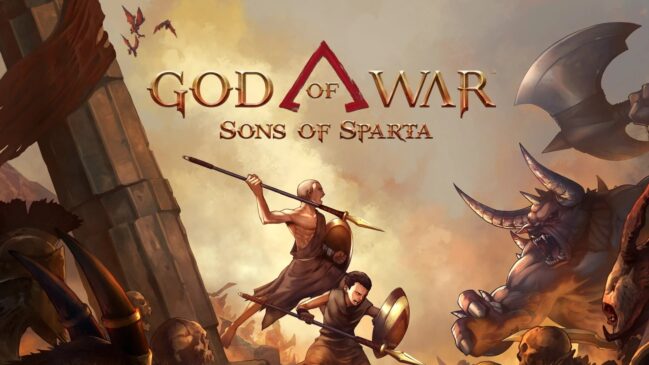
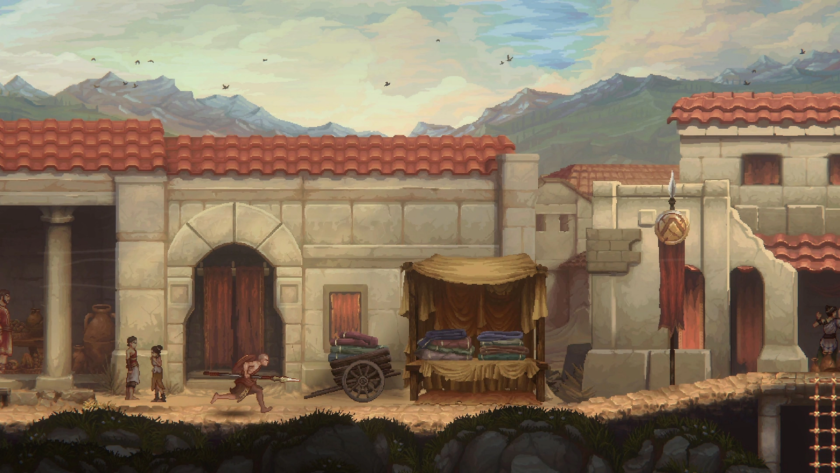
Visually, God of War: Sons of Sparta is defined by its commitment to a fully 2D, hand-drawn pixel art style. That decision alone reshapes expectations. This is not a scaled-down imitation of the Norse era’s photorealism. It is a deliberate pivot toward retro identity, leaning into the lineage of classic side-scrolling action games while attempting to retain the tonal weight of the franchise.
The environments are where the art direction shines most clearly. Spartan training grounds stretch across dusty plains rendered in layered pixel detail, while craggy mountain paths and ancient stone corridors use parallax scrolling to create a convincing sense of depth. Temples and myth-touched spaces introduce subtle palette shifts, colder hues and faint golden highlights, that distinguish divine influence from the harsh earth tones of mortal life. Despite the constraints of pixel art, the world rarely feels flat. There is careful layering in the backgrounds, with distant silhouettes and atmospheric effects giving scenes dimension without breaking the 2D frame.
Lighting effects are surprisingly nuanced for this style. Torchlight flickers against stone walls, casting dynamic shadows across character sprites. Sparks burst sharply during combat, momentarily brightening the screen and emphasizing impact. These small details help sell the physicality of encounters and prevent the visuals from feeling static.
Character sprites are expressive, though more divisive. Younger Kratos is animated with aggressive, sharp motions that communicate volatility. His attack frames are clear and deliberate, reinforcing the grounded combat system. Deimos’ movements are slightly more reserved, subtly reinforcing their contrasting temperaments. However, the refinement of these sprites has drawn mixed reactions. In certain sequences, animations can appear less fluid than expected, and overlapping enemy sprites during crowded battles occasionally reduce visual clarity. Compared to some modern pixel art titles known for ultra crisp animation, Sons of Sparta does not always reach the same technical polish.
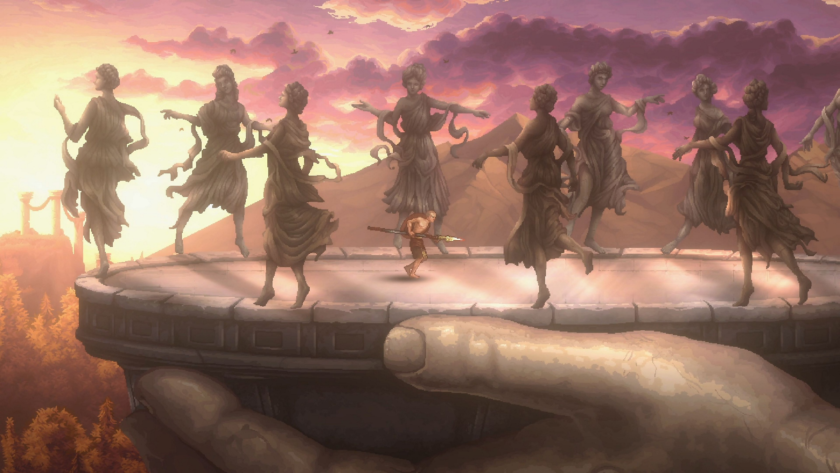
Where the 2D visuals ultimately succeed is in cohesion. The art direction aligns with the game’s narrative focus on origin and discipline. The contained frame mirrors the story’s intimate scope. Rather than overwhelming players with spectacle, the presentation keeps attention fixed on movement, positioning, and the emotional tension between the brothers.
Audio design is where Sons of Sparta truly finds its identity. The soundscape is raw and grounded. Steel striking shield has a satisfying weight. Footsteps crunch against gravel. Distant training chants echo through Spartan barracks. These environmental details build immersion in a subtle but powerful way.
The score takes inspiration from the franchise’s choral roots while dialing back the operatic intensity. Percussion dominates early sections, driven by heavy drums that mimic the cadence of military drills. As the story expands, strings and low chanting weave in, hinting at divine presence without overwhelming the scene. It is less bombastic than previous entries but emotionally effective.
Voice acting carries much of the emotional weight. Younger Kratos is portrayed with a volatile edge that occasionally cracks into vulnerability. Deimos’ performance is restrained and layered, offering a contrast that strengthens their dynamic. The dialogue is delivered with conviction, even when the script occasionally leans into familiar franchise gravitas.
Final Thoughts
God of War: Sons of Sparta is not an attempt to outdo the towering legacy of God of War. It does not chase the cinematic highs of God of War or the operatic fury of God of War III. Instead, it narrows its focus and asks a quieter, more difficult question: who was Kratos before he became a myth?
It will divide the fanbase. Players looking for relentless spectacle and explosive set pieces may find it too contained. Those willing to embrace its slower burn and mechanical focus, however, will find a thoughtful character study that adds meaningful texture to Kratos’ legacy. By grounding his rage in vulnerability and his strength in fear, Sons of Sparta reframes what we thought we knew about him.
In the end, this is not a story about gods falling. It is about a boy being shaped into something harder than iron.
8/10