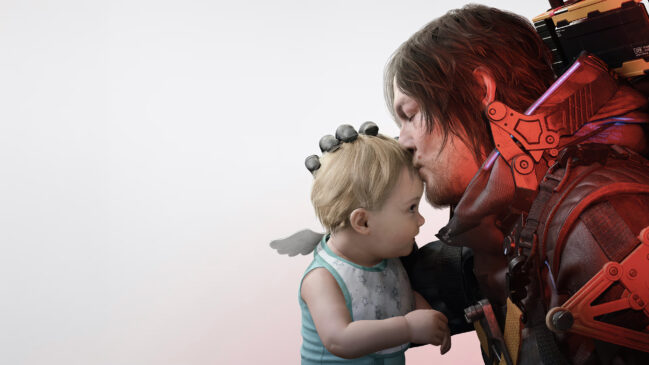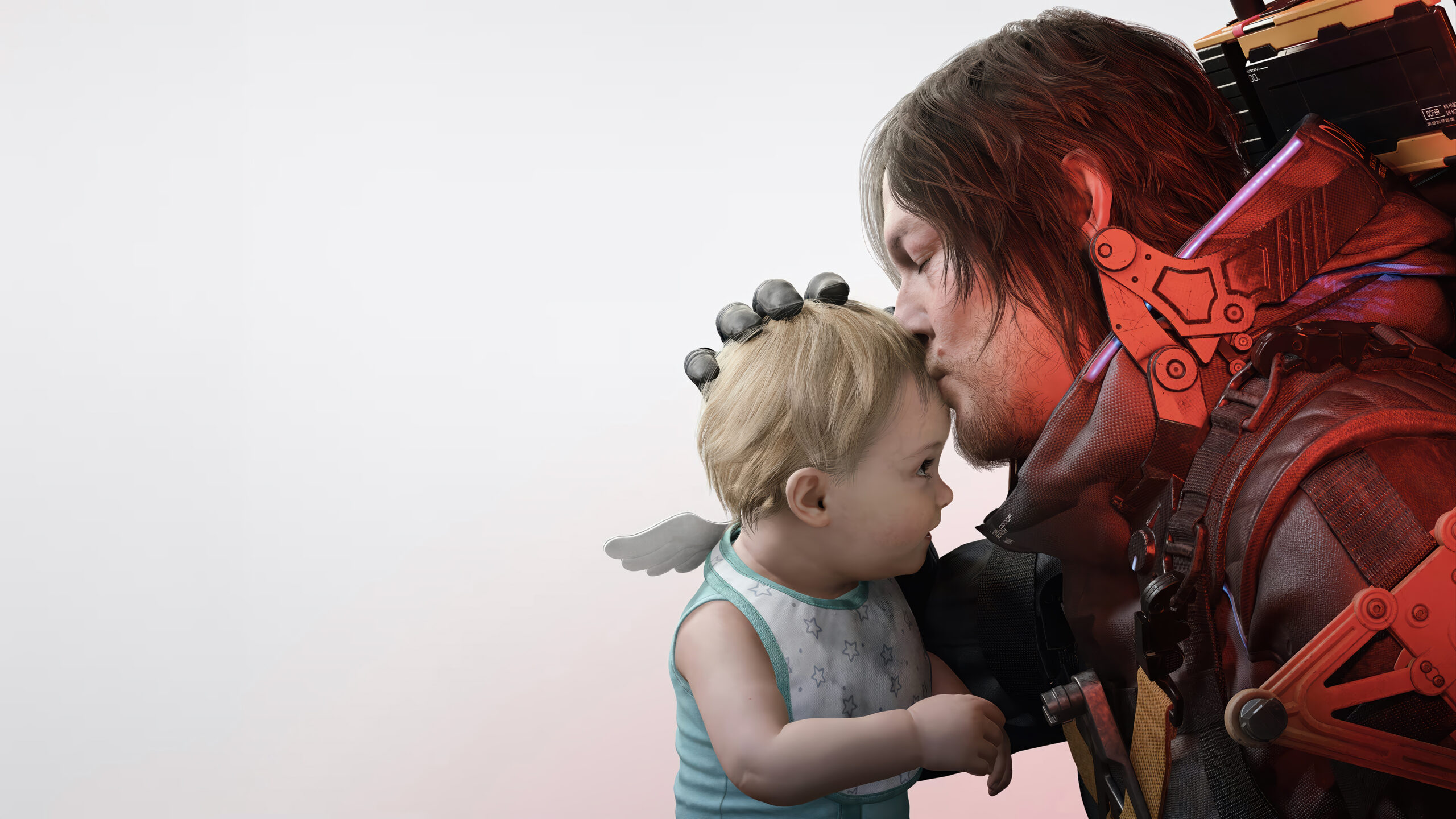
Coming back to Death Stranding 2: On the Beach after spending dozens of hours with it on PlayStation 5, I wasn’t entirely sure what would stand out the second time around. This is, after all, a game that thrives on first impressions, on the slow realization of what it is and what it’s trying to say. But revisiting it now, with a bit of distance, what struck me wasn’t just the spectacle or the strangeness. It was how deliberately it holds things back, how it lets its ideas settle in rather than forcing them on you.
That’s very much in line with Hideo Kojima’s style. His games have always been as much about mood as they are about mechanics, and Death Stranding 2 leans into that more than ever. Built on the foundations of Death Stranding, this sequel feels more confident in its identity, less concerned with explaining itself and more interested in letting you sit with its world for a while.
Now that it’s finally made its way to PC, there’s a certain curiosity in revisiting it. Not because the core experience has changed, but because Death Stranding 2 is the kind of game that reveals different layers depending on when and how you come back to it. And in that sense, returning to it here feels less like replaying a familiar journey and more like seeing it from a slightly different angle.
AT A GLANCE
Genre: Action-adventure
Developer: Kojima Productions
Publisher: Sony Interactive Entertainment
Story
Kojima’s love for cinema has always been obvious, but Death Stranding 2 might be his most film-like work yet. The story unfolds through long, deliberate cutscenes, cryptic conversations, and quiet stretches where atmosphere does most of the talking. It is unconventional storytelling, sometimes frustratingly so, but also undeniably distinct.
The narrative picks up years after the original. Sam is no longer just a porter. He is a reluctant figure of legend, pulled back into a world that refuses to let him rest. A new threat tied to the Beach emerges, alongside a mysterious faction known as the Drawn, pushing the story into stranger and more existential territory. Returning characters such as Fragile, Lou, and Deadman feel changed by time and consequence, carrying emotional weight that the game takes its time exploring.
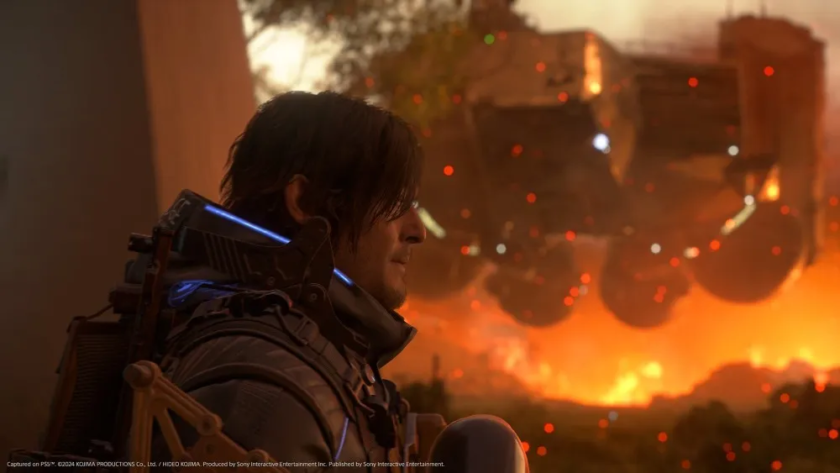
Tonally, the game constantly shifts between large-scale, almost apocalyptic ideas and small, deeply human moments. It is about connection, but also about grief, legacy, and the burden of being needed. Kojima leans heavily into abstraction here. The structure is fragmented, the symbolism is prominent, and the storytelling often feels closer to art-house science fiction than traditional game narratives.
Think less straightforward plot and more something in the vein of Annihilation or 2001: A Space Odyssey. It is not always interested in giving clear answers, and that can be both its strength and its weakness.
What grounds it all are the performances. Norman Reedus brings a quiet exhaustion to Sam, while Léa Seydoux gets far more emotional range this time around. New additions, including Elle Fanning, fit seamlessly into a story that is as much about internal healing as it is about cosmic mystery.
Importantly, the narrative is not separate from the gameplay. It is embedded within it. The act of traversal, the loneliness of long journeys, and even the layout of the world itself all reflect Sam’s emotional state. It is classic Kojima, with storytelling and interaction constantly feeding into each other.
Yes, it can be indulgent. Some scenes go on longer than necessary, and certain ideas are repeated a bit too often. Still, there is a sincerity here that is hard to ignore. In a space filled with safe, predictable narratives, Death Stranding 2 chooses to be strange, reflective, and deeply personal.
Gameplay
If you played the original, the core loop will feel familiar. You are still hauling cargo across vast, hostile landscapes, carefully managing balance, stamina, and route planning. This time, everything feels smoother and more deliberate.
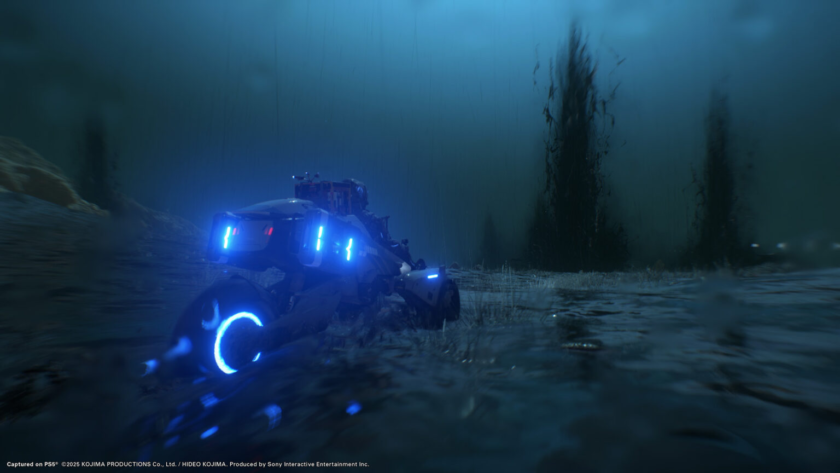
Traversal remains the heart of the experience, but it has been meaningfully refined. Movement is more responsive, tools are more versatile, and the environment itself plays a bigger role. Dynamic weather, ranging from harsh storms to environmental hazards, can completely reshape your journey and force you to adapt on the fly.
Combat has also seen noticeable improvements. It is still not the focus, but it feels far more fluid and integrated than before. Encounters are faster, stealth is more viable, and the expanded enemy variety keeps things engaging without turning the game into a full action shooter.
The new systems are where things stand out. Buddy Bots now feel like actual companions rather than background tools, while customizable exosuits let you shape how you approach each mission. There is also a progression system that gives you more control over Sam’s growth, adding a welcome layer of depth.
One of the more unexpected additions is the inclusion of music as an interactive element. You can carry instruments and create quiet, personal moments during your journey. It does not affect gameplay directly, but it reinforces the game’s focus on mood and connection in a meaningful way.
The Beach also plays a larger role. It is no longer just a narrative concept. You actively explore it, including surreal underwater sequences that blur the line between reality and metaphor.
Multiplayer integration has been expanded as well. Player-created structures feel more meaningful and persistent, strengthening the game’s asynchronous strand system. Even without direct interaction, there is a constant sense of shared effort.
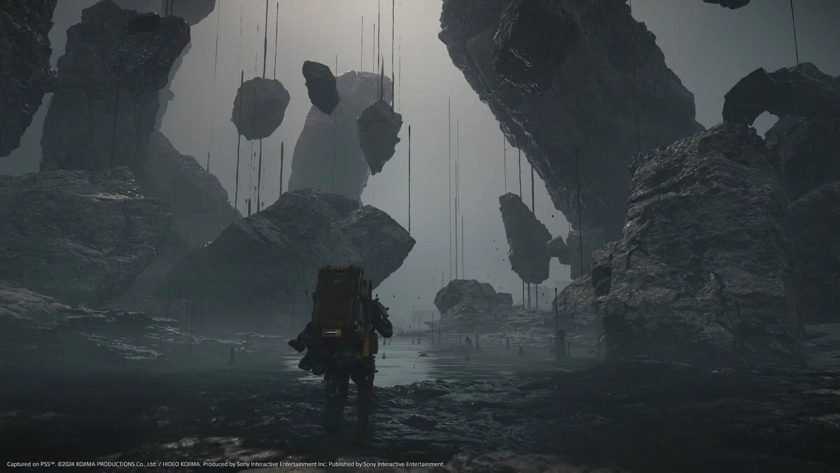
In the end, Death Stranding 2 does not reinvent its core formula. It refines it. The result is a deeper and more cohesive experience that feels more confident in what it wants to be.
Visuals, Audio, and Performance
On PC, Death Stranding 2: On the Beach feels less like a straightforward port and more like the definitive version of the game. Running it on a high-end rig, what immediately stands out is how well the Decima Engine scales. Whether you’re pushing ultra settings at 4K or dialing things back for a smoother 60 FPS at 1440p, the game holds up remarkably well, with modern features like frame generation, DLSS, and dynamic resolution making a tangible difference in performance.
Visually, it’s every bit as striking as the PS5 version, if not more so, and in many cases noticeably sharper and smoother depending on your setup. That said, it’s not completely flawless. I did run into occasional stutters, especially when experimenting with upscaling and frame generation, and those hiccups can briefly break immersion . Still, those moments are the exception rather than the rule. For the most part, this is an incredibly polished port, one that not only preserves the original experience but enhances it with flexibility and performance headroom that consoles simply cannot match.
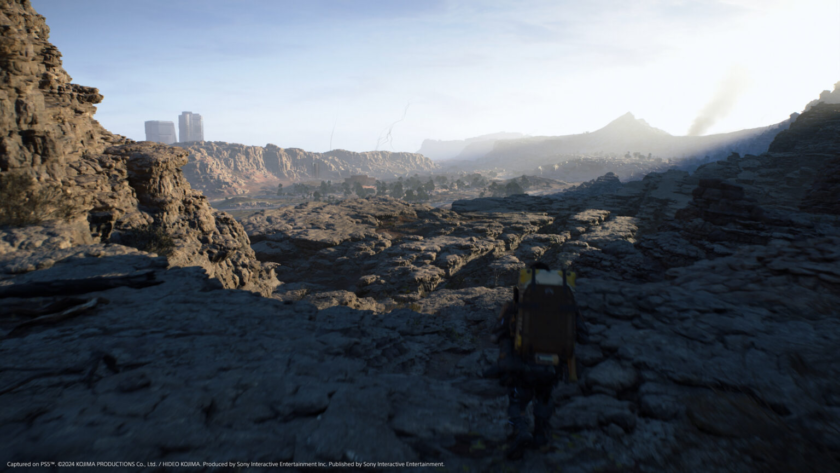
Character models are equally impressive, capturing subtle expressions that help sell even the strangest moments. Kojima’s cinematic direction is evident throughout, with carefully framed shots and seamless transitions between gameplay and cutscenes.
The audio design is just as strong. Environmental sounds are crisp and immersive, and the voice acting, featuring Norman Reedus and Léa Seydoux among others, is consistently excellent.
The real standout is the music. With contributions from Woodkid and Ludvig Forssell, the soundtrack does not just accompany the game. It defines it. Tracks respond to your journey, turning simple traversal into something emotional and memorable.
Final Thoughts
Death Stranding 2: On the Beach is more than just a sequel. It is a refinement of everything the original set out to do. It is visually stunning, mechanically stronger, and narratively more confident, even if it remains as divisive as ever.
What makes it special is not any one element, but how everything comes together. The gameplay, world design, performances, and especially the music all work in sync to create something cohesive and intentional.
This will not be a game for everyone. It is slow, abstract, and unapologetically strange. For those willing to embrace it, though, it offers something rare. It feels personal, meditative, and genuinely different.
It is not just something you play. It is something you experience.
10/10