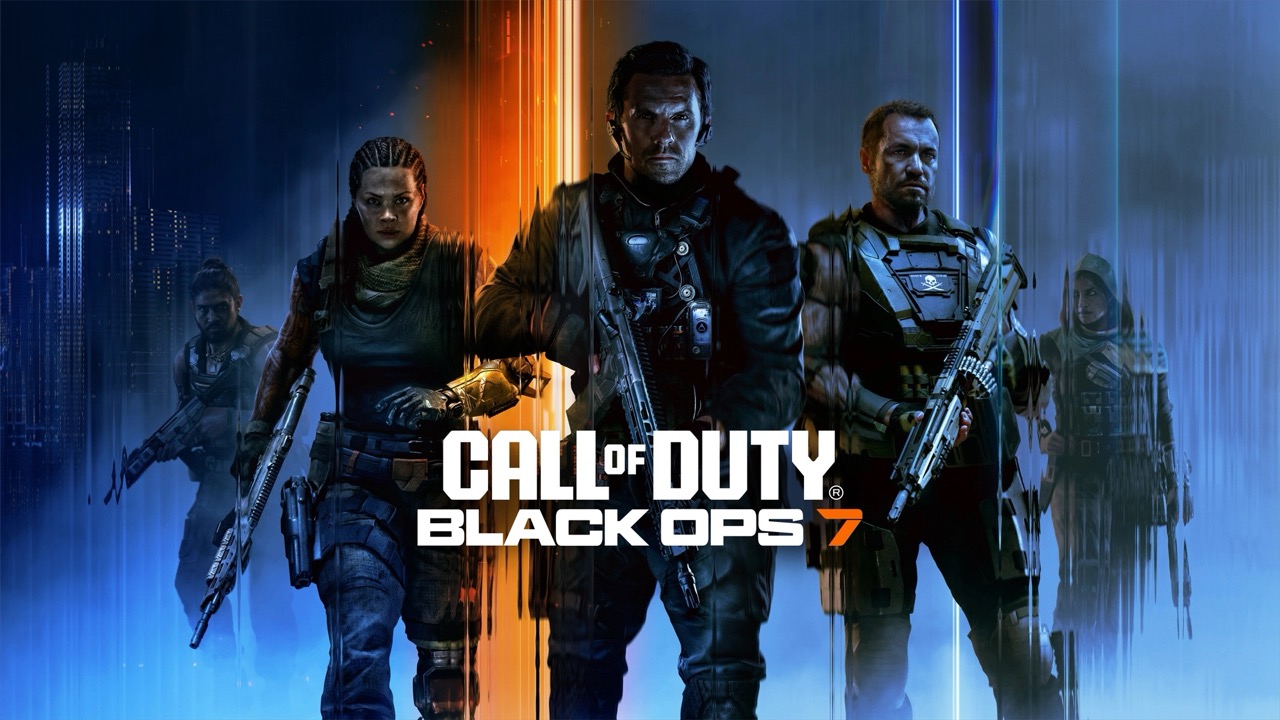
Call of Duty: Black Ops 7 arrives with the confidence of a series that knows exactly what its fans expect, yet it still tries to push itself in meaningful ways. Developed by Treyarch and Raven Software, this new chapter drops you into the year 2035 where psychological warfare, misinformation, and near-future technology shape a world that feels unmistakably Black Ops. From the opening mission, the game sets a darker and more intense tone, with returning protagonist David Mason taking the lead in a global struggle that quickly spirals into chaos.
AT A GLANCE
Genre: Action
Developer: Treyarch, Raven Software, Beenox, High Moon Studios, Sledgehammer Games, Infinity Ward, Activision Shanghai, Demonware
Publisher: Activision
Release Date: 14 November 2025
Platforms: PlayStation 5, Xbox Series X|S, PC
Launching on both current and last generation consoles, Black Ops 7 positions itself as one of the most ambitious entries in the franchise. The question is how well all of these ideas come together. Let’s take a closer look.
Story Campaign
Black Ops 7 throws players into the year 2035, continuing the Black Ops mythos with familiar faces and new threats. The campaign centers on David Mason, returning from Black Ops 2, as he leads a JSOC (Joint Special Operations Command) team into a world increasingly torn apart by fear, misinformation, and a powerful shadow organization known as “The Guild.” The Guild is revealed to be at the heart of a sinister plot: they’re leveraging advanced bio-technologies and a hallucinogenic “toxin” to manipulate public perception and weaponize people’s worst nightmares.

One of the more unsettling narrative threads is a bioweapon called “The Cradle”, which causes vivid and terrifying hallucinations in those exposed. These sequences force Mason and his squad to relive past traumas, weaving in psychological horror and paranoia as major thematic elements. In a twist, a message attributed to Raul Menendez (the series’ recurring antagonist) is revealed to be a deepfake — not his manifesto, but an A.I.-generated propaganda tool used by the Guild to stoke unrest.
As the campaign progresses through its 11 missions, players travel across several global locations — from Tokyo to Nicaragua, and eventually, to Avalon, a key city that not only anchors the story but becomes the stage for what comes next. The missions combine traditional Black Ops set-pieces (espionage, sabotage, infiltration) with more surreal, mind-bending moments that reflect the psychological manipulation at the heart of the Guild’s power.
Perhaps the biggest change in Black Ops 7 is that the entire campaign is co-op capable, supporting up to four players. Whether you want to play solo or bring in friends, the campaign is designed around teamwork and shared narrative beats. This shift makes every mission feel more dynamic, since objectives and pacing adapt to your squad size.
Rather than seeing the campaign as a standalone single-player story, Black Ops 7 treats it as the foundation for a broader, more persistent experience. Player progression is unified: XP, weapon levels, and camo challenges earned during the campaign carry over into multiplayer, Zombies, and even the new Endgame mode. This means every mission has long-term value.
Loadouts are also more flexible. Through the C-Link system (the in-game OS), players can customize their weapons, abilities, and gear before dropping into missions. This customization gives each operator a defined “power journey,” which becomes even more important in Endgame.
Endgame Mode
Endgame is Black Ops 7’s big experiment — a replayable, open-world PvE mode that kicks in after (or alongside) the campaign. Initially, you had to finish all 11 campaign missions to unlock it, but the devs recently dropped that requirement, making Endgame accessible to everyone.
In Endgame, squads of up to four players (and a broader pool of up to 32) drop into Avalon, using wingsuits to navigate the terrain. The city is dotted with Guild strongholds and “exposure zones” leaking the mysterious toxin, which ties directly into the campaign’s central threat. As you play, your Operator levels up a Combat Rating, unlocking Skill Tracks — for example, you might choose a “Surgeon” path that improves healing and revives, or a more aggressive route for damage and speed.

Your loadout for Endgame includes a main weapon, a melee weapon, a “field acquisition” weapon (gear you might find during a run), and a piece of special equipment. You can upgrade weapons at workbenches scattered around the map to improve their rarity and power. But it’s not risk-free: when you exfiltrate, you must escape via a VTOL — if you die in the match, you lose your progress (combat rating and gear) from that run.
The mode is built for replayability: dynamic assignments, escalating difficulty zones, and an incentive structure that rewards both cautious and bold playstyles. On top of that, any XP, weapon progress, or battle pass rewards you earn in Endgame flow back into your main progression, making it a deeply integrated experience rather than just a bonus side mode.
Zombies Mode
Zombies in Call of Duty: Black Ops 7 feels like the mode’s most confident return to form in years. It leans into everything that made Zombies iconic while still evolving in ways that feel smart, modern, and genuinely exciting. Treyarch clearly understood that fans wanted something bigger, faster, and deeper, and this year’s offering delivers exactly that.
The centerpiece is a massive round based map that is easily one of the most ambitious Treyarch has ever built. Instead of a single tight arena, you explore a large network of regions, each with its own atmosphere, challenge level, and strategic layout. The return of enhanced movement changes the feel of every encounter. Wall running, sliding, climbing, and quick vertical repositioning let you break out of bad situations and create your own escape routes. For a mode that often becomes a frantic dance for survival, this fluid movement makes each round feel fresh.

Fans who loved classic survival challenges will appreciate the dedicated survival maps. These smaller spaces strip Zombies back to its roots by focusing purely on endurance. There are no long quest steps or puzzle chains to interrupt the action. It is simply you, your weapons, and waves of increasingly aggressive undead. It is a great option for players who want the purity of classic high round runs.
The lineup of side modes is strong as well. Dead Ops Arcade 4 brings back the chaotic twin stick madness with new stages, power ups, and enemy types. It is goofy, frantic, and a perfect escape when you want something lighter. The new Cursed mode takes the opposite direction. It is a brutal variant designed for players who want fewer safety nets and much tougher enemies. You start with limited gear, rewards are harder to earn, and survival becomes a real test of skill and teamwork.
Progression has been tightened across the board. Essence and Salvage remain the backbone of the economy, letting you open new areas and upgrade your loadout as you survive longer. The new Augment system gives you more control over your build, offering bonuses to perks, equipment, and ammunition types. GobbleGum also returns with a wide spread of effects that can completely change the feel of a match. Armor has been redesigned to make defensive choices more meaningful, especially in higher rounds where enemies hit harder and more often.

Enemy variety is better than it has been in several entries. Armored zombies and newly introduced variants force you to stay mobile and coordinate with your squad. The pacing is more dynamic, so you are not always holding a single chokepoint. Sometimes you need to rotate, regroup, or move into a completely different region to stay alive. It creates a more tactical flow that rewards decision making as much as mechanical skill.
On the narrative side, the Dark Aether storyline continues with a cast that blends old fan favorites with newer personalities. The tone mixes science fiction, horror, and psychological weirdness in a way that feels right at home in the Black Ops universe.
Multiplayer
The multiplayer in Black Ops 7 is where the game truly hooked me. It feels like Treyarch set out to push the series forward while still keeping the familiar Black Ops identity intact. After several hours across different modes and maps, I kept finding little moments where everything just clicked, whether it was a perfectly timed flank or a full team push that changed the momentum of a match.

At launch, you get 16 core 6v6 maps. Thirteen are brand-new and three are returning classics from Black Ops 2. The mix works really well. Some maps funnel you into quick, chaotic fights, while others reward long sightlines or clever positioning. There is a nice variety in pacing, which kept me from falling into the same habits from match to match.
On top of the standard maps, Treyarch added two huge 20v20 Skirmish maps. These are not just beefed up versions of existing maps. They are built specifically for large-scale combat and come with their own objectives and movement opportunities. The inclusion of wingsuits, grappling hooks and quick traversal completely changes the flow. Skirmish quickly became my favorite mode because it felt like a blend of classic Call of Duty chaos and something more tactical. You are constantly making decisions about altitude, map control and squad coordination. When everything comes together, it feels incredible.
There is also a new 6v6 mode called Overload. Only one Overload device spawns in the map, and you score by delivering it to one of the enemy zones. It creates a simple and intense push-and-pull structure. Matches in Overload feel like a constant race to make the right play, and the chaos around the device often leads to some of the most exciting moments.

One of the biggest changes this year is the Omnimovement system. Wall jumps, combat rolls and mantling allow for far more creativity in how you approach fights. These moves are not just flashy animation tricks. They matter. On smaller maps, I found myself sliding around cover, bouncing off walls to dodge gunfire and using quick rolls to reposition. In bigger modes like Skirmish, the vertical freedom is even more important. Players who truly master movement will have a real advantage.
The good news is that you are not forced into this high-mobility playstyle. If you prefer to play more grounded and tactical, that approach still works. The overall tuning feels surprisingly fair.
Weapons, Loadouts and Progression
There are 30 weapons available at launch, and the selection feels balanced between experimental future tech and more traditional Call of Duty favorites. Each weapon class has clear strengths, and I enjoyed swapping between loadouts to adapt to different maps.

The Overclock system is one of the standout features. Your Scorestreaks, Field Upgrades and Equipment evolve the more you use them. That means your tools do not stagnate after you unlock them. They grow with you. It gave me an actual sense of progression mid-season, which is something Call of Duty has struggled with in the past.
Weapon Prestige also makes a comeback. This system rewards players who want to truly master a specific weapon, unlocking unique camos and prestige attachments as you climb. It adds depth for players who enjoy grinding and refining a particular gun.
There is also a weapon build sharing feature. You can generate a code for your custom build and send it to a friend. It sounds like a small addition, but it encourages experimentation, and I found myself swapping builds with teammates regularly.
Perks have been reworked into Hybrid Combat Specialties. Instead of picking a rigid preset, you can mix different perks together to create something that fits your exact playstyle. I liked this system a lot because it encouraged me to try out combinations I would have never considered in a traditional perk grid. Whether you want to boost mobility, tighten defensive stats or make yourself a volatile grenade specialist, there is room to get creative.
Scorestreaks also get a boost from the Overclock system. Since streaks become stronger as you use them, they feel like part of your progression instead of a simple reward for kills.
Gunplay feels excellent. Shots have weight, hit markers feel sharp and animations blend nicely with the new movement system. Every weapon I tried felt responsive, and the feedback from audio and recoil kept combat satisfying. Movement ties into combat smoothly. I never felt floaty, but I also never felt stuck to the ground.

Matchmaking also felt more stable than some of the recent entries. Lobby flow was quick, and the separation between large-scale modes and traditional 6v6 helped create a smoother match-to-match experience.
It is not all perfect. There is a real learning curve with the new mobility system. Skirmish especially demands that you understand how wingsuits and grappling hooks work if you want to survive. On smaller maps, movement-focused players can sometimes dominate in a way that feels frustrating, especially if you prefer slower pacing.
Balancing will need ongoing attention. With how many weapons and customization options exist at launch, some builds are already showing signs of becoming too powerful. Overclocking streaks also has potential to become unbalanced if early-season tuning is off.
For more casual players, the layers of progression and customization might feel overwhelming at first. There is simply a lot to take in.
Visuals, Audio and Technical Performance
Visually, Black Ops 7 delivers a solid step forward for the series without trying to reinvent the wheel. On PS5 the lighting immediately impressed me. Environments feel more alive thanks to improved reflections, particle effects and shadows that react naturally to movement and weather conditions. The campaign especially features some striking environments, from fog filled forests to neon washed city districts.
Character models and weapon textures look sharper than previous entries, and the visual clarity during combat is excellent. I rarely struggled to read enemy silhouettes, even in close quarters firefights. The particle effects from explosions, smoke and debris make firefights feel more cinematic without becoming overwhelming.

On PC the game looks noticeably better at higher resolutions. When I tested it on a high end setup, the boosted texture quality and increased draw distance made the maps feel much larger and more detailed. PC offers the best possible visual experience, but it is also more demanding.
Overall, the graphics feel clean, modern and consistent. They may not redefine the franchise visually, but they absolutely meet the expectations of a next-generation Call of Duty.
Audio design is one of the standout elements of this year’s game. Every weapon sounds distinct, punchy and impactful. Firing indoors has more echo while outdoor firefights feel wide and layered. Directional audio is sharp enough that I often relied on footsteps and distant gunfire to make tactical decisions in multiplayer.
Explosions, drones, killstreaks and environmental effects all blend together without overwhelming the mix. With a headset the game becomes incredibly immersive, and on PS5 the 3D audio support adds another layer of depth. On PC audio quality depends more on your setup, but with high quality headphones the game sounds exceptional.

The soundtrack does a good job supporting the story’s darker tone. It never tries to overshadow the gameplay but instead enhances tension when needed.
Final Thoughts
Call of Duty: Black Ops 7 delivers a confident but familiar package that leans on the series’ core strengths, offering a grounded, stealth-focused campaign that stays engaging despite some uneven pacing and a few overly scripted moments. Multiplayer remains the highlight, with improved movement, varied maps, and strong weapon balance creating a sharp and rewarding competitive loop, even if early learning-curve hurdles and occasional movement-heavy playstyles can frustrate newcomers. Zombies rounds out the experience with a large round-based map, enhanced traversal, and a mix of classic and experimental modes that provide solid replay value, though some progression tweaks and difficulty spikes may divide longtime fans.
Overall, it is a polished entry that refines rather than reinvents, delivering a dependable and well-rounded Black Ops experience.
8/10